Guinea pigs cannot produce vitamin C in their own bodies — a biological quirk they share with humans. Without a regular dietary supply, they develop scurvy, a serious and progressive deficiency that affects joints, skin, healing, and immunity. The good news is that a diet built around fresh leafy vegetables and vitamin C-fortified pellets covers their needs straightforwardly.
Why guinea pigs cannot make their own vitamin C
Most mammals produce vitamin C internally through a metabolic process. Guinea pigs — like humans, some primates, and a few other species — lack a key enzyme in that pathway. This means that unlike a dog or a rat, your guinea pig has no internal reserve to fall back on. Whatever vitamin C they get comes entirely from food.
This is not a minor footnote. It is one of the most important things to understand about guinea pig nutrition, and it is why any serious feeding guide puts vitamin C near the top of the conversation.
How much vitamin C do guinea pigs need?
A healthy adult guinea pig needs roughly 10–30mg of vitamin C per day. Guinea pigs who are stressed, ill, pregnant, or nursing may need more — up to 30–50mg daily during those periods. Young guinea pigs and elderly ones also benefit from reliable daily supply.
These numbers sound precise but feeding to a milligram is not practical or necessary. What matters is having vitamin C-rich foods available daily so that intake is consistent rather than sporadic.
Best food sources of vitamin C
| Food | Approx. vitamin C per 100g | Notes |
|---|---|---|
| Red bell pepper | ~128mg | Excellent daily choice; low sugar |
| Yellow bell pepper | ~183mg | One of the highest food sources available |
| Green bell pepper | ~80mg | Good, though lower than red or yellow |
| Fresh parsley | ~133mg | High vitamin C; offer in moderate amounts |
| Kale (curly) | ~120mg | Rotate with other greens; higher in calcium |
| Broccoli | ~89mg | Occasional use; can cause gas in some pigs |
| Strawberry | ~59mg | Useful but higher sugar; treat quantities |
| Kiwi | ~93mg | Good source; acidic, so small portions |
| Romaine lettuce | ~24mg | Lower vitamin C but great daily volume food |
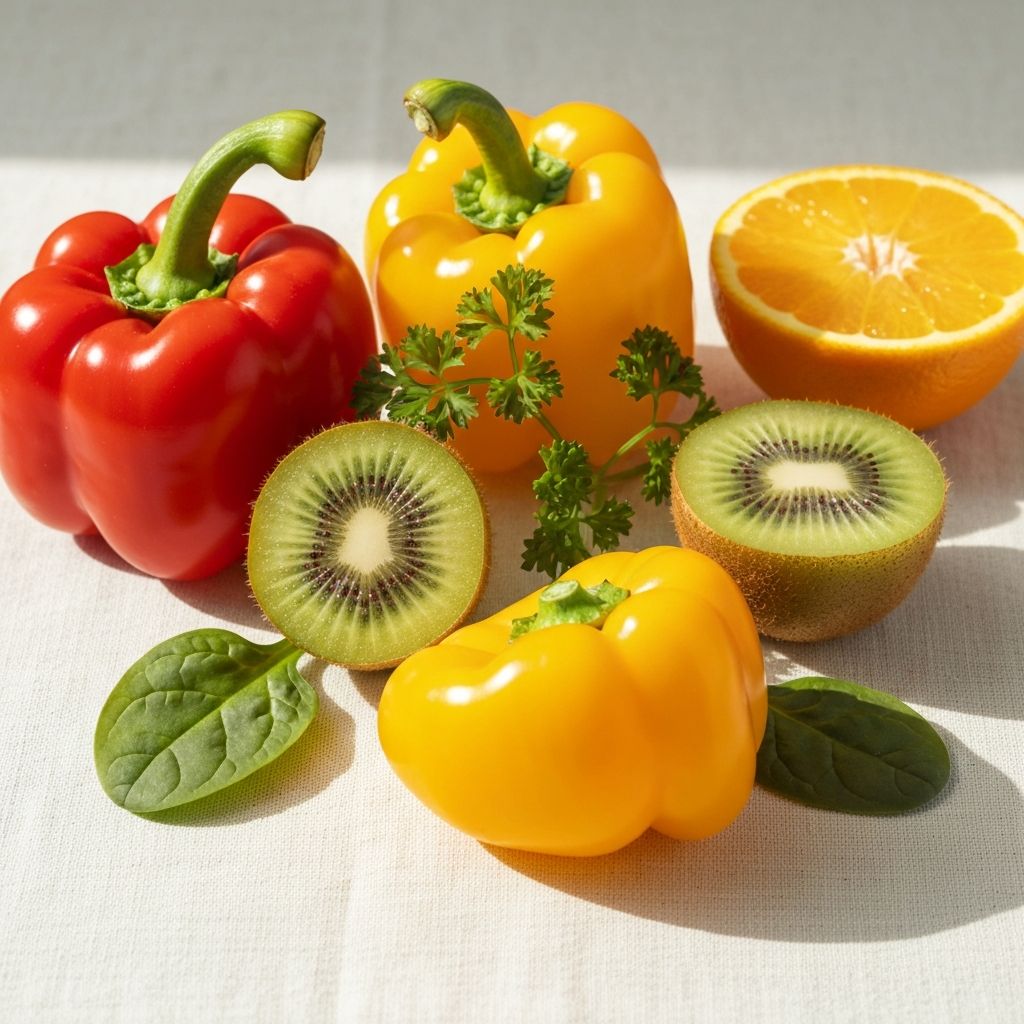
Red and yellow bell pepper stand out clearly as the most practical daily vitamin C sources. They are low in sugar, widely available, inexpensive, and most guinea pigs eat them willingly. A small strip of red pepper alongside leafy greens every day takes care of vitamin C requirements for most healthy adults without any need for supplements.
Do pellets provide enough vitamin C?
Good quality vitamin C-fortified pellets do contribute to daily intake, but with a significant caveat: vitamin C is unstable and degrades quickly once the bag is opened and exposed to air and light. Pellets stored in a cool, dark place and used within six weeks of opening retain more vitamin C than those left open on a shelf for months. This is not a reason to rely heavily on pellets as your primary vitamin C source — it is a reason to use fresh food as the foundation and treat pellets as a useful supplement.
Buy pellets in smaller bags rather than economy-sized ones unless you have a large herd. The vitamin C content of a bag sitting half-empty for three months is genuinely lower than the label suggests.
Supplements: when they might help
For most guinea pigs on a good fresh diet, supplements are unnecessary. The exception is a guinea pig who is recovering from illness, is pregnant or nursing, is elderly, or is going through a period where fresh food intake has been reduced for any reason.
If you want to supplement, vitamin C drops added directly to fresh water are not recommended — vitamin C oxidises rapidly in water and the dose becomes unreliable within hours. Powders or drops given directly onto food or on a small piece of vegetable are more reliable. If you are considering supplementing due to suspected deficiency, speak to an exotics vet first. Symptoms of deficiency can overlap with other conditions that need proper diagnosis.
Signs of vitamin C deficiency
Deficiency in guinea pigs — sometimes called scurvy — develops gradually. Early signs are easy to miss: slight weight loss, less enthusiasm for food, a guinea pig that seems to move a little less freely than usual. As deficiency progresses, more obvious signs appear: joint swelling and pain (particularly in the back legs and hips), rough or dull coat, slow healing of minor wounds, bleeding from the gums or around the teeth, and increasing lethargy.
A guinea pig showing signs of pain when moving or who is reluctant to bear weight on their hind legs needs a vet visit rather than just a dietary change. Vitamin C deficiency is treatable, but the health guide covers why these symptoms need professional assessment — some look similar to other conditions that need different treatment entirely.
If you have noticed coat changes alongside other symptoms, our article on hair loss and deficiency signs covers the overlap.
The simplest daily vitamin C habit
A small strip of red or yellow bell pepper, offered as part of the daily vegetable rotation, alongside a reliable fresh food diet, is all most healthy adult guinea pigs need. It does not require supplements, exact measurements, or a spreadsheet. It requires consistency — which is both the simplest and most important word in guinea pig nutrition. Our daily diet plan shows how to build that consistency into a practical routine.
Frequently asked questions
Can I just give my guinea pig orange juice for vitamin C?
No. Orange juice is too acidic and too sugary. Fresh food sources are always preferable, and a piece of bell pepper is both more nutritious and less likely to cause digestive upset.
How do I know if my guinea pig is getting enough vitamin C?
A healthy, active guinea pig with bright eyes, good appetite, clean coat, and normal movement is generally getting enough. If any of those markers change, and particularly if movement seems uncomfortable, contact an exotics vet.
Do guinea pigs need more vitamin C in winter?
Not specifically because of winter. But illness, stress, and reduced appetite — all of which can increase during cold periods — raise the need for reliable dietary vitamin C. Ensuring fresh vegetables are offered daily year-round covers this.
Can I give too much vitamin C?
Excess vitamin C from food is generally excreted rather than stored, so it is difficult to overdose through fresh vegetables. High-dose supplementation is a different matter — if you are concerned about intake, fresh food rather than supplements is the safer route.