Hair loss in guinea pigs has several distinct causes, and identifying the right one matters because the treatments are completely different. The most common culprits are skin mites, fungal infection, barbering from a cagemate, hormonal imbalance, or nutritional deficiency. Most require veterinary diagnosis rather than home treatment, particularly if the skin looks sore, the pig is scratching intensely, or the hair loss is spreading.
What hair loss in guinea pigs actually looks like
Hair loss can appear as smooth bald patches, thinning across a wide area, broken or ragged hair shafts, or patches with rough, flaky, or reddened skin underneath. The location, pattern, and condition of the skin all give useful clues, though accurate diagnosis usually requires a vet to take skin scrapes or coat samples.
Some seasonal shedding and coat thinning is normal in guinea pigs, particularly around the face and behind the ears as they age. Symmetrical thinning on elderly sows can be hormonal. But spreading bald patches, intense scratching, or any skin that looks sore or inflamed is always worth investigating promptly. Our health guide covers the general principles of when to act.
The most common causes
| Cause | Signs | Contagious? | Needs vet? |
|---|---|---|---|
| Skin mites (e.g. Trixacarus) | Intense scratching, visible distress, hair loss | Yes — guinea pigs and sometimes humans | Yes, urgently if severe |
| Fungal infection (ringworm) | Circular patches, flaky skin, broken hairs | Yes — to other pets and humans | Yes |
| Barbering | Chewed-looking hair shafts, specific areas | No | No, but review group dynamics |
| Hormonal (ovarian cysts) | Symmetrical thinning on flanks, mostly sows | No | Yes — can be managed |
| Vitamin C deficiency | Dull coat, weight loss, joint stiffness too | No | Yes if severe |
| Allergic reaction | Diffuse itching and thinning | No | Yes if persistent |
| Natural ageing | Gradual thinning, particularly face/ears | No | Only if other signs present |
Skin mites
Trixacarus caviae is a burrowing mite specific to guinea pigs. It causes intense, distressing itching — often severe enough that affected animals scratch frantically, may vocalise, or have seizure-like episodes from the discomfort. This is not something to manage at home. Mites need prescription treatment, typically an ivermectin-based medication from a vet. All guinea pigs in the group need treating, as does the enclosure.
Fungal infection
Ringworm — a fungal infection, despite the name — appears as circular bald patches with flaky, slightly raised edges, often starting around the face, ears, or nose. It is contagious to other guinea pigs and can pass to humans and other pets. Antifungal treatment needs to be prescribed by a vet, and thorough cleaning of the enclosure is essential. Check your grooming basics to understand how routine coat checks help catch this early.
Barbering
Barbering is when one guinea pig chews the hair of another (or their own). The hair shafts look broken or stubby rather than shed cleanly. The skin underneath is usually completely normal. It can be caused by boredom, dominance behaviour, or insufficient space. It is not a medical emergency, but it is worth reviewing the group dynamic and enclosure size. Our coat checks and brushing guide explains how to tell barbering from other types of hair loss.
Hormonal hair loss in sows
Female guinea pigs with ovarian cysts often develop symmetrical hair loss along the flanks. Other signs include a swollen abdomen and changes in behaviour. Ovarian cysts are very common in unspayed sows, particularly from middle age onwards. They are manageable with veterinary help — the approach depends on the pig's age and overall health.
Vitamin C deficiency
A poor diet over time can contribute to a dull, rough coat and hair that comes out more easily. Vitamin C deficiency rarely causes dramatic hair loss on its own, but it affects skin and coat condition noticeably. If coat changes are accompanied by weight loss, reluctance to move, or signs of joint pain, address both diet and a vet visit simultaneously.
What you can safely check at home
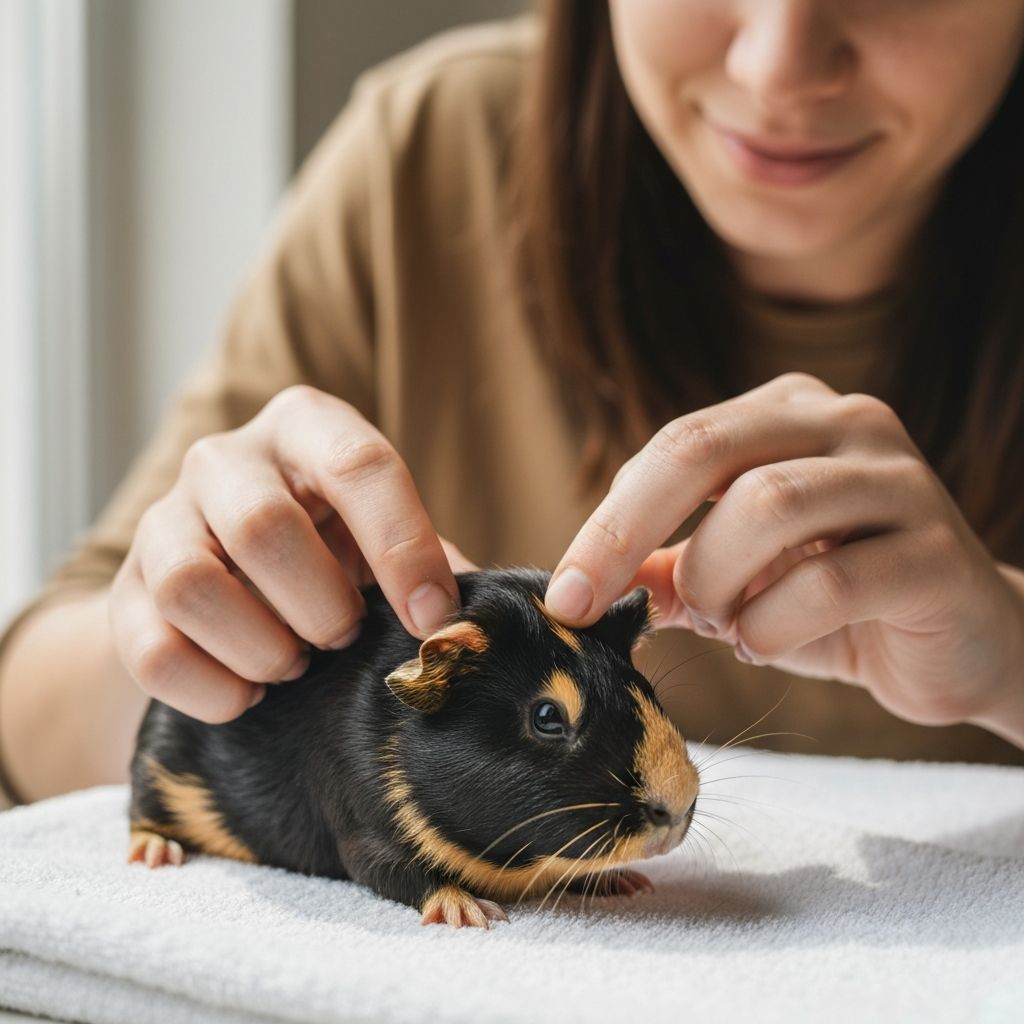
Gently part the coat in the affected areas and look at the skin. Is it clean and normal, or red, flaky, or thickened? Are the hair shafts cleanly shed, or do they look chewed? Is there any visible movement in the coat (though mites are microscopic and not visible to the naked eye)? Is the guinea pig scratching more than usual?
Note where the hair loss is, how quickly it spread, and whether other guinea pigs are affected. This information is genuinely useful for the vet.
Why professional diagnosis matters
Mite treatment applied to a guinea pig with ringworm will not help — and vice versa. Treating the wrong cause delays improvement and allows the real problem to progress. Skin scrapes, coat samples, and sometimes hormone tests are needed to confirm what you are actually dealing with. A guess, however educated, is not a substitute.
Frequently asked questions
Can ringworm pass from guinea pigs to humans?
Yes. Ringworm is a zoonotic fungal infection — it can be transmitted between guinea pigs, other pets, and people. Wash hands thoroughly after handling an affected animal. Anyone who develops circular, itchy rash patches should speak to their GP.
Can I treat mites at home without a vet?
Over-the-counter spot treatments marketed at guinea pigs are often ineffective against Trixacarus. A prescription treatment from an exotics vet is more reliable and correctly dosed. Given how distressing severe mite infestation is for the animal, professional treatment is always the right route.
My guinea pig is losing hair but does not seem itchy. What might it be?
Non-itchy hair loss is more consistent with hormonal causes, barbering, or nutritional deficiency than mites or ringworm. Still worth a vet check, particularly if the loss is spreading or the skin looks abnormal.
Will the hair grow back?
In most cases, yes — once the underlying cause is treated. Mite-related and fungal hair loss typically regrows fully after treatment. Hormonally-caused hair loss may partially regrow depending on the management approach. Very long-standing deficiency-related coat damage may take longer to recover.