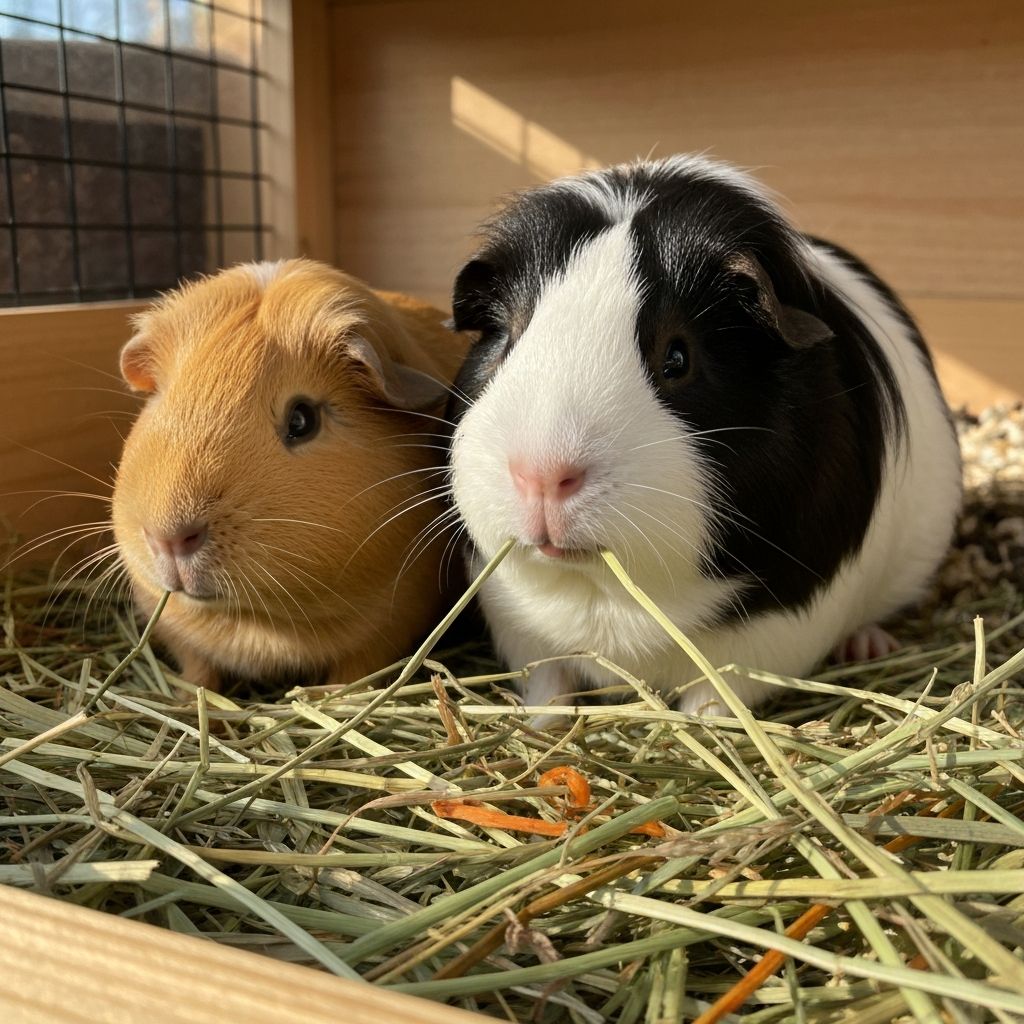
If you only remember one rule about feeding guinea pigs, make it this: hay first, extras second.
Most food problems begin when pellets, treats, or novelty feeds start crowding out the boring but essential stuff. Guinea pigs need a diet built around fibre, chewing time, and daily access to vitamin C-rich fresh foods.
The everyday feeding framework
1. Unlimited hay and grass
Hay should always be available. It keeps the gut moving, helps wear down constantly growing teeth, and gives guinea pigs something to do for most of the day. Fresh grass is great too, but introduce it gradually and only when clean and dry.
Use big, generous hay piles rather than a stingy decorative rack. Guinea pigs like to eat in it, sleep beside it, and tunnel through it.
2. Pellets as a measured top-up
Good guinea pig pellets support the rest of the diet. They are not the bulk of it.
Choose:
- plain guinea pig pellets, not muesli mix
- a fresh bag stored in a cool, dry place
- a routine amount that fits the brand guidance and your pigs' condition
Avoid the “just top up the bowl” habit. Fresh pellets are better than stale leftovers.
3. Fresh greens and vegetables
Fresh veg adds interest, hydration, and vitamin C. The goal is variety, not a giant salad mountain.
A simple approach works well:
- one daily serving per guinea pig
- several different items across the week
- regular vitamin C-rich choices, such as pepper and leafy greens
- slower use of sweeter or higher-calcium foods
Introduce new foods gradually. Guinea pig stomachs are not interested in your spontaneous wellness era.
A practical daily rhythm
Morning
- top up hay
- refresh water
- give a measured pellet portion
Late afternoon or evening
- offer the fresh veg portion
- remove leftovers later so they do not wilt or sour
Through the day
- keep hay available
- watch appetite, droppings, and enthusiasm for food
A pig who suddenly ignores food is not “being fussy”. That is a health flag. Go to Health.
Foods to treat with caution
Some foods are fine in moderation but should not become daily staples. Use smaller or less frequent amounts of:
- sugary fruit
- very watery treats
- richer greens that may not suit every pig
- foods that one pig tolerates but another finds gassy
Foods to avoid
Do not feed:
- lawnmower clippings
- mouldy hay or spoiled veg
- onion, garlic, or avocado
- iceberg lettuce
- potato
- sugary commercial treats as a regular habit
- muesli-style dry mixes
If in doubt, leave it out and check with a reliable small-pet vet source before experimenting.
Do guinea pigs need vitamin supplements?
Most healthy guinea pigs can get what they need from a well-run diet that includes fresh pellets and daily veg choices rich in vitamin C. If a vet recommends supplementation, follow that advice rather than improvising with random drops and guesswork.
Feeding multiple guinea pigs without drama
If you live with more than one guinea pig, spread food out.
- use more than one hay area
- scatter veg or place it in more than one spot
- avoid one tiny bowl becoming the centre of political unrest
- watch for pigs who hang back or get interrupted
Resource spacing is part feeding strategy, part peace treaty.