The best guinea pig home is not the cutest one in the shop. It is the one that gives them room to move, hide, eat, rest, and get away from each other when they need a bit of breathing room.
If you are deciding between a small ready-made cage full of plastic add-ons and a plain-looking setup with serious floor space, choose the boring one every time.
The core rule: bigger really is better
For two guinea pigs, think in terms of floor area, not height. A useful modern benchmark is:
- at least 5ft x 2ft for the main living area if it is paired with a proper separate run
- closer to 6ft x 4ft if indoor guinea pigs are living permanently in one main space without separate exercise access
These are starting points, not bragging rights. More room is better. Boars, active youngsters, and mixed-personality groups usually benefit from extra space even more.
What a good layout includes
A strong setup should offer:
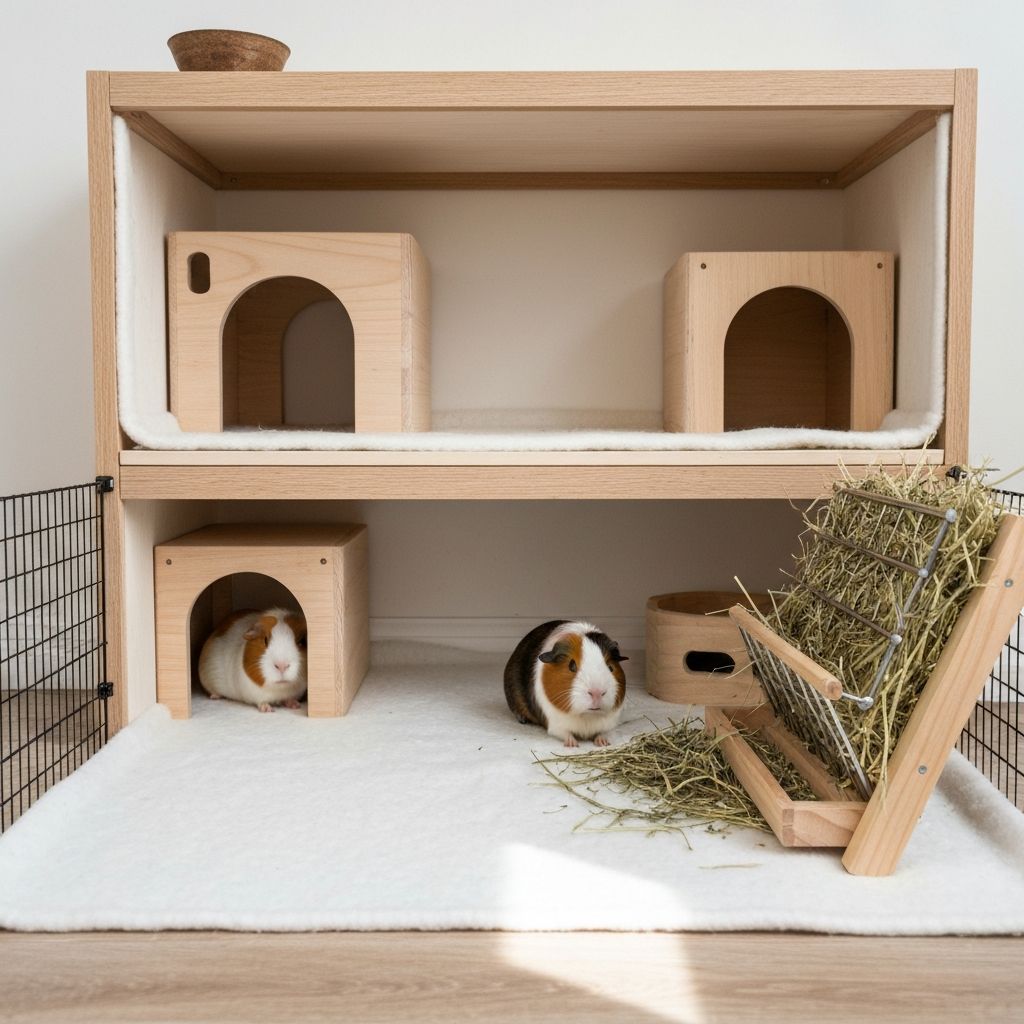
- a solid floor, never wire flooring
- multiple hideouts
- at least two key resource zones for hay and water
- enough open space for movement and short bursts of speed
- quiet corners for resting
- easy cleaning access for humans
- protection from sun, draughts, damp, and predators
Think like a planner, not a shopper. Guinea pigs need flow.
Indoor setup ideas
Indoor homes work brilliantly when they are designed around the room rather than squeezed into it as an afterthought. Good indoor options include:
- modular C and C style setups
- large puppy-pen conversions
- custom wooden pens with wipe-clean bases
- low, open layouts with generous ventilation
Indoor housing should be away from radiators, sunny windows, and constant foot traffic.
Outdoor setup ideas
Outdoor guinea pigs need more than a hutch and good luck. A proper outdoor arrangement should be:
- predator-proof
- weatherproof
- shaded from direct sun
- sheltered from wind and rain
- lined with dry, comfortable bedding
- paired with a secure exercise run or larger protected living zone
If you are outdoors year-round, Seasonal Care and Sheds are essential reading.
Resource sharing without squabbles
Many group problems are actually layout problems. Help everyone live more peacefully by providing:
- more hides than guinea pigs
- multiple exits on shelters where possible
- more than one water source
- more than one hay station
- enough width for pigs to pass each other without squeezing
- visual breaks without dead-end corners
Things to avoid
Avoid:
- wire floors
- narrow starter cages sold for “small pets”
- tall rabbit-style hutches with poor floor area
- one enclosed hide for multiple pigs and no alternatives
- direct midday sun
- hot conservatories
- draughty corners or damp sheds with no ventilation