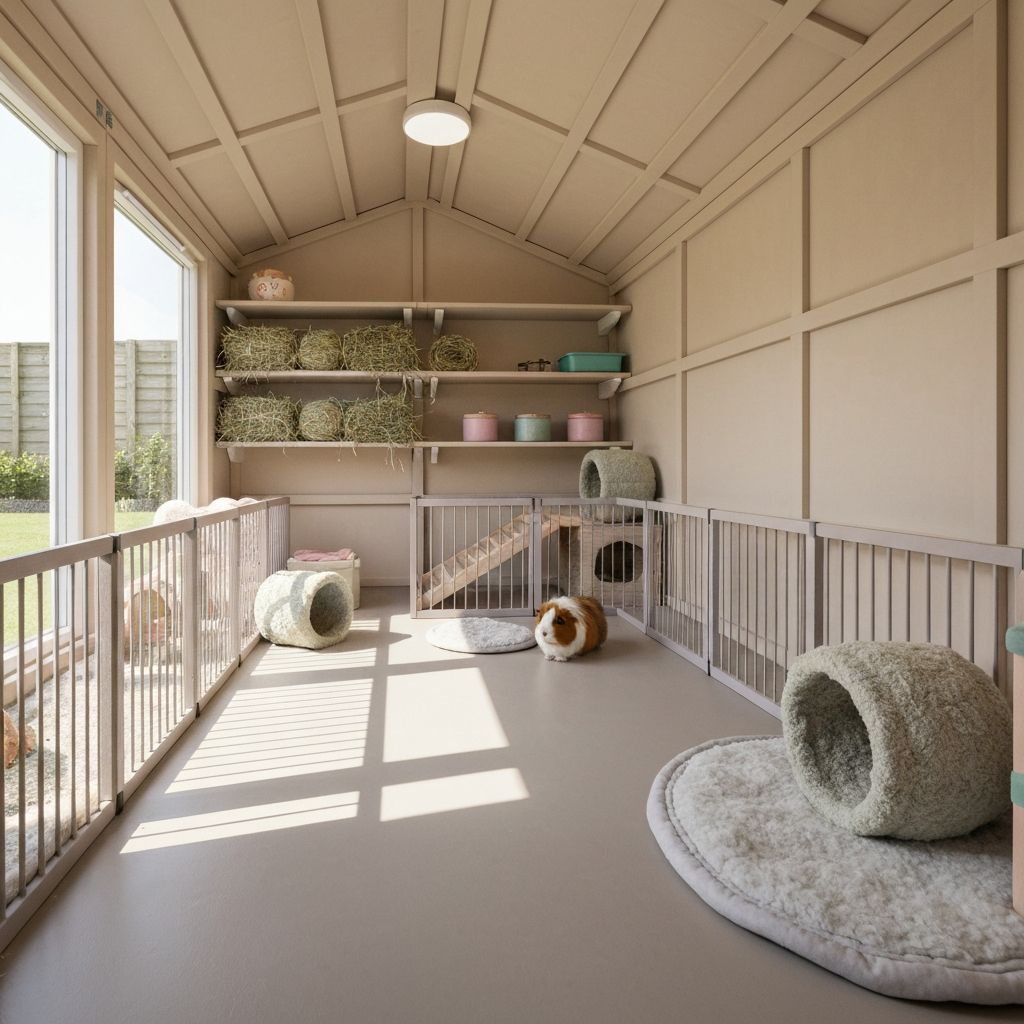
A well-set-up shed can make an excellent guinea pig space. It gives you room, storage, weather protection, and the chance to build something far better than a tiny off-the-shelf hutch. But it only works if you treat the shed like a real animal room, not a place to stash a lawnmower and hope for the best.
What makes a shed setup work
A good guinea pig shed should be:
- dry
- secure
- well ventilated
- insulated sensibly
- easy to clean
- protected from temperature extremes
- free from fumes, chemicals, and general junk
The key question is not “Can guinea pigs live in a shed?” It is “Can this shed behave like a safe, stable environment every day of the year?”
The non-negotiables
Ventilation
Fresh air matters, but so does control. You want airflow without constant draughts blasting straight through sleeping areas.
Insulation
Insulation helps the space stay more stable, but it is not magic. You still need weather monitoring and a backup plan for heat or cold spikes.
Security
Doors, locks, vents, and any mesh-covered openings must be predator-resistant and human-proof enough to make you sleep at night.
Light and routine access
You need enough light to clean, inspect, groom, and notice health changes. If you cannot see the pigs well, your care quality drops.
How to lay out the shed
Think in zones:
- a main living area with roomy pens or secure housing
- a hay and food storage area kept dry
- a cleaning shelf or caddy
- safe temporary space for pigs during cleans
- easy walking room for you
Do not cram every inch with housing. Human access is part of good animal care.
Weather management matters year-round
In summer
Sheds can overheat fast. Use ventilation, shade, temperature monitoring, and a real plan for hot days. A shed that feels fine at breakfast can become dangerous by afternoon.
In winter
Cold, damp air and frozen water can cause problems quickly. Extra bedding helps, but stable conditions and daily checks matter more.
Read Seasonal Care alongside this page. A shed is still part of the weather story.
What should never live in a guinea pig shed
Do not store:
- petrol
- paints or solvents
- pesticides
- strong cleaning chemicals
- machinery that gives off fumes
- mouldy hay
If the shed doubles as a workshop, gym, or chemical cupboard, it is not a guinea pig shed.
Your weekly shed checklist
Every week, check:
- temperature and ventilation
- water access
- damp patches
- signs of chewing damage or security weakness
- hay quality and dryness
- insect activity in warm months
- whether the cleaning routine is still manageable
The best shed setup is the one that remains easy to run in bad weather, not just photogenic in July.