Guinea pigs do not care that the forecast looked gentle at breakfast. What matters is whether their environment stays dry, shaded, ventilated, and stable when the weather shifts three times in one day.
Seasonal care is really about adaptation. The basics stay the same. The details change with temperature, damp, sun, wind, and fly pressure.
Summer care
Heat can become dangerous quickly, especially once temperatures push into the mid-20s Celsius and beyond. In warm weather:
- provide deep shade throughout the day
- improve airflow without creating harsh draughts
- offer plenty of fresh water and check bottles more often
- use cool areas such as wrapped frozen bottles placed nearby, not forced against them
- avoid conservatories, sheds without ventilation, and direct midday sun
- feed fresh greens at cooler times of day
- watch for lethargy, fast breathing, weakness, or a pig that sprawls and seems too hot to move
Long-haired, elderly, overweight, and less mobile guinea pigs usually need closer monitoring in hot weather.
Watch for flies in warm months
Warm weather also increases the risk of flies, especially for pigs with messy back ends, reduced mobility, or urinary problems. Check the rear end frequently in summer and keep bedding dry. If a guinea pig is persistently dirty at the back, that is a grooming and health issue, not just a housekeeping issue. See Grooming and Health.
Winter care
Cold is not just about temperature. Damp, wind, and unstable housing can be just as serious. In winter:
- keep the enclosure dry and well-bedded
- block draughts without blocking ventilation
- make sure outdoor water does not freeze
- use extra hay for nesting and warmth
- check sleeping areas first thing in the morning and last thing at night
- move outdoor pigs to a more protected environment during cold snaps, prolonged damp, or unstable conditions
A cold but dry, insulated, well-managed environment is very different from a damp, windy one. Weather-proofing matters as much as temperature.
Spring and autumn transitions
The in-between seasons create their own problems because humans tend to relax too early. Be careful with:
- sudden warm spells that catch outdoor enclosures without enough shade
- wet grass after winter if pigs are reintroduced to grazing
- temperature swings between day and night
- changing ventilation needs in sheds and outbuildings
- moulting and messy coat care in longer-haired pigs
Do not switch routines just because the calendar says it is spring. Use actual conditions.
If your pigs live outdoors
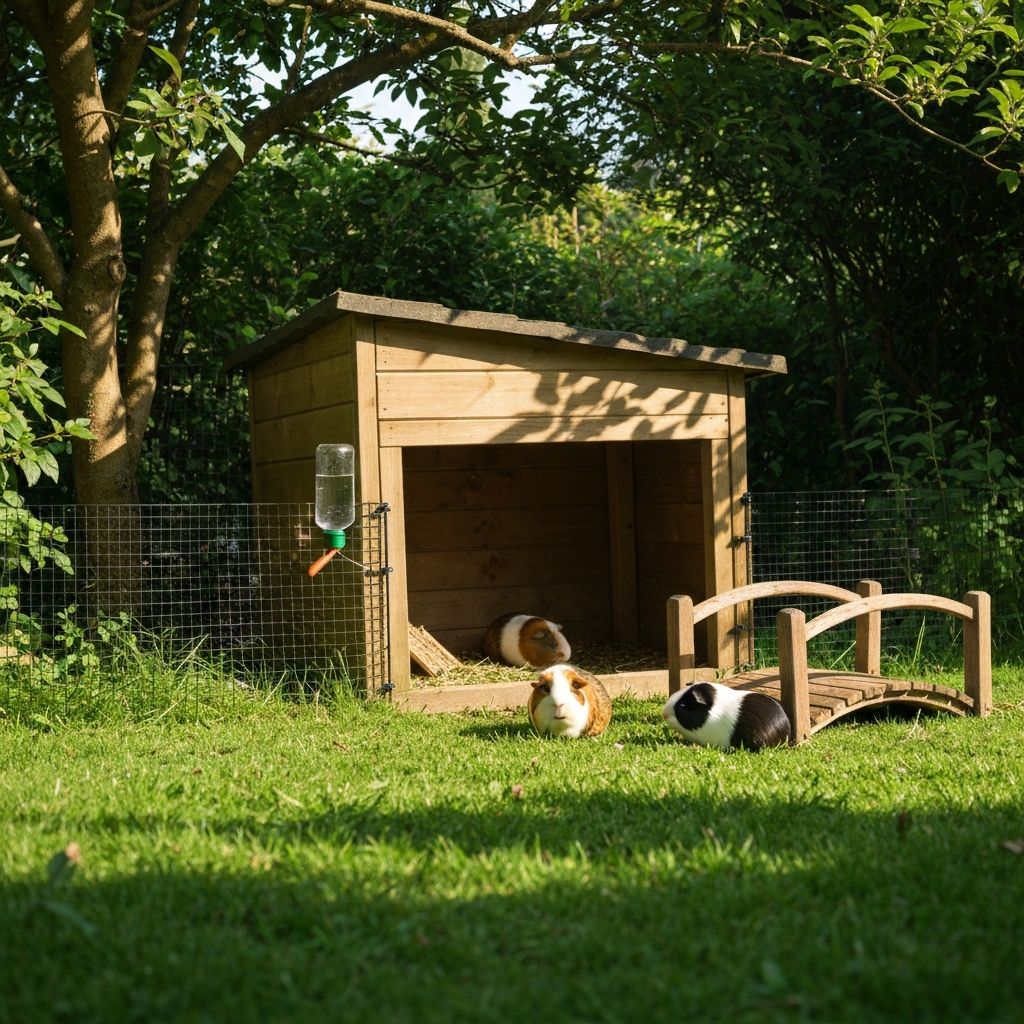
Outdoor living requires backup plans. You need:
- a way to move pigs quickly if weather turns extreme
- spare dry bedding and hay
- shade options that still allow airflow
- insect awareness in warm weather
- a stable cleaning routine even when it is raining and inconvenient
If your outdoor setup includes an outbuilding, read Sheds.
Seasonal care is easiest when the setup is flexible
The best homes adapt well. They allow you to add shade, extra bedding, more ventilation, or a temporary indoor move without rebuilding the whole arrangement. That is why Hutches and Cages and Bedding matter so much. Seasonal care starts with design.