The best first decision is usually not coat colour, breed, or accessories. It is choosing a pair that can live happily together, giving them enough floor space, and building a routine you can actually maintain every week.
Guinea pigs can be brilliant companions for calm, observant households. They are expressive, gentle, and full of habits that become deeply familiar. They are also not low-effort ornaments. They need room, fresh food, regular cleaning, health checks, and daily attention.
Ask yourself the useful questions first
Before you bring guinea pigs home, make sure you can answer these honestly:
- Do I have room for a properly sized enclosure and exercise space?
- Can I care for at least two compatible guinea pigs, not one lonely pet?
- Can I afford hay, bedding, vegetables, pellets, and veterinary care every month?
- Do I have a quiet place for them away from direct sun, draughts, loud noise, and other pets?
- If these guinea pigs are “for the kids”, are the adults prepared to be the real care team?
- Do I have a plan for holiday care, cleaning supplies, and emergency vet transport?
If any of those feel shaky, wait. Good preparation is kinder than a rushed purchase.
Choose companionship first
Most guinea pigs do best with other guinea pigs. That means your normal starting point should be a compatible pair or group, not a single pig.
Beginner-friendly options often include:
- two compatible sows
- a stable pair of boars with enough space and resources
- a neutered boar with one or more sows, if guided by rescue or veterinary advice
If possible, consider rehoming rather than impulse-buying. Rescue teams often know which pigs are already bonded and can help match temperament, sex, and setup.
Buy or build the home before the guinea pigs arrive
The enclosure should be ready before arrival day, not assembled while two nervous animals sit in a carrier wondering what fresh chaos this is.
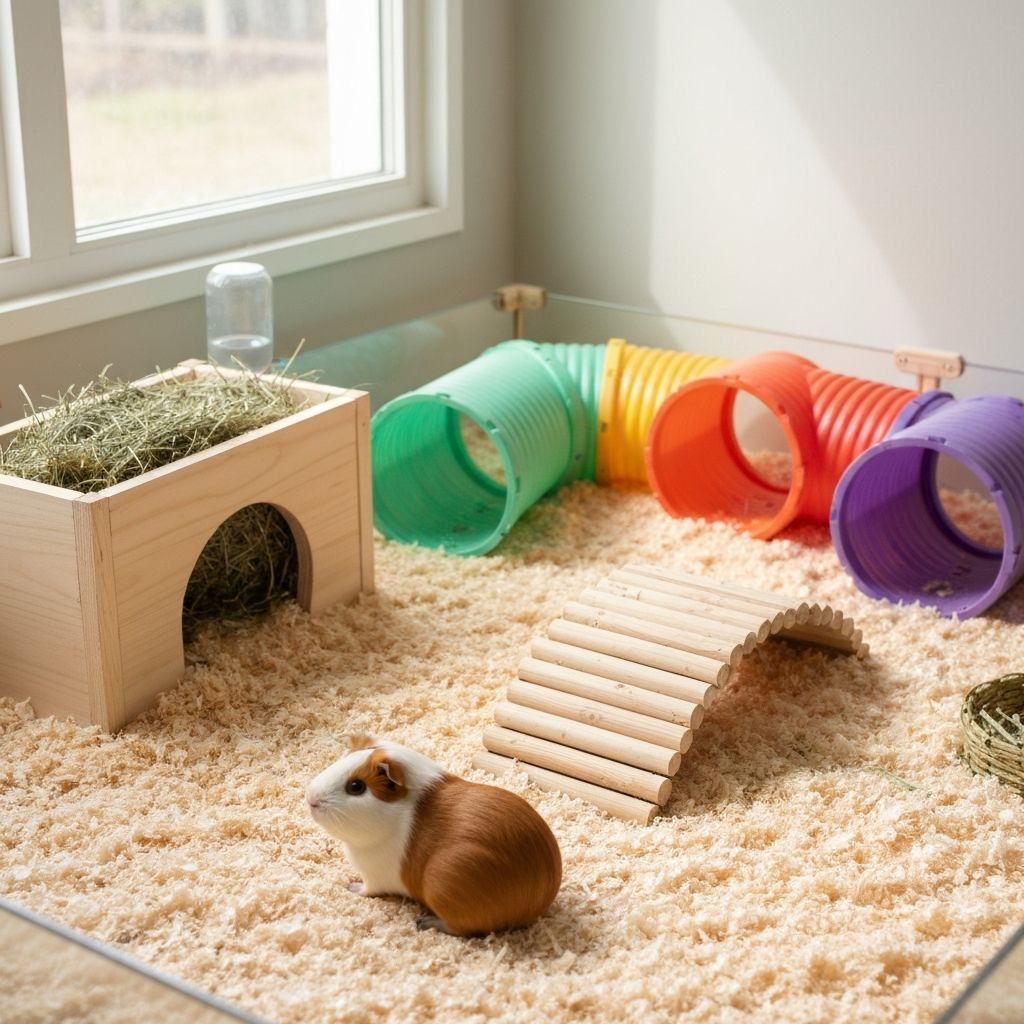
Your setup should include:
- the main enclosure and, ideally, separate exercise space
- a large hay area
- at least two hides with more than one way out
- fresh water in a bottle or bowl, or both
- measured guinea pig pellets
- bedding or fleece system
- ceramic or stainless steel bowls
- a pet carrier for transport and vet visits
- kitchen scales for regular weighing
- a small cleaning kit with pet-safe disinfectant, cloths, and a brush
For layout and size, go to Hutches and Cages. For everyday feeding, read Feeding.
What the first 24 hours should look like
Arrival day should feel deliberately boring.
- Put them straight into their prepared home.
- Give them hay, water, and familiar food.
- Keep the room calm and quiet.
- Resist the urge to over-handle them immediately.
- Let them explore, hide, snack, and map the new space on their own terms.
Talk softly. Move slowly. Sit nearby. Let curiosity do the work.
What the first week should look like
During the first week, focus on routine rather than performance.
- refill hay often
- offer their normal pellets and fresh veg without suddenly changing everything
- spot-clean wet areas daily
- watch droppings, appetite, posture, and activity
- begin short, calm handling once they are eating and settling
- weigh them consistently and keep a note of changes
A new pig who is quiet but eating may simply be settling. A pig who is quiet and not eating needs urgent attention. The Health page explains the difference.
Common beginner mistakes
Buying too small a cage
Small cages cause tension, boredom, mess build-up, and stress. Bigger is easier to live with than cramped.
Starting with one guinea pig
Human company is not a full substitute for guinea pig company.
Treating pellets as the main diet
Hay is the foundation. Pellets are the top-up.
Buying every cute accessory in the shop
Start with space, hay, hides, water, and safe flooring. Fancy extras come later.
Waiting too long when something feels off
Guinea pigs can go downhill quickly. Learn the daily signs in Health and trust early instincts.