Most guinea pigs need brushing at least weekly, nail trimming every four to six weeks, and — in the majority of cases — no baths at all. Grooming requirements vary significantly by coat type; a short-haired Rex needs far less brushing than a long-haired Peruvian. The routine that works is the one built around your individual guinea pig's coat and kept consistent.
How coat type changes grooming needs
| Coat type | Examples | Brushing frequency | Special needs |
|---|---|---|---|
| Short, smooth | American, Teddy | Weekly or as needed | Minimal — quick check is enough |
| Rosettes (rough) | Abyssinian | Weekly | Check rosettes for matting and debris |
| Dense, curly | Rex | Every few days | Prone to trapping debris; use soft brush |
| Medium-length | Coronet, some mixed breeds | 2–3x per week | Watch the crest and behind ears |
| Long, flowing | Peruvian, Silkie | Daily or near-daily | May need trimming around back end |
Brushing: tools and technique
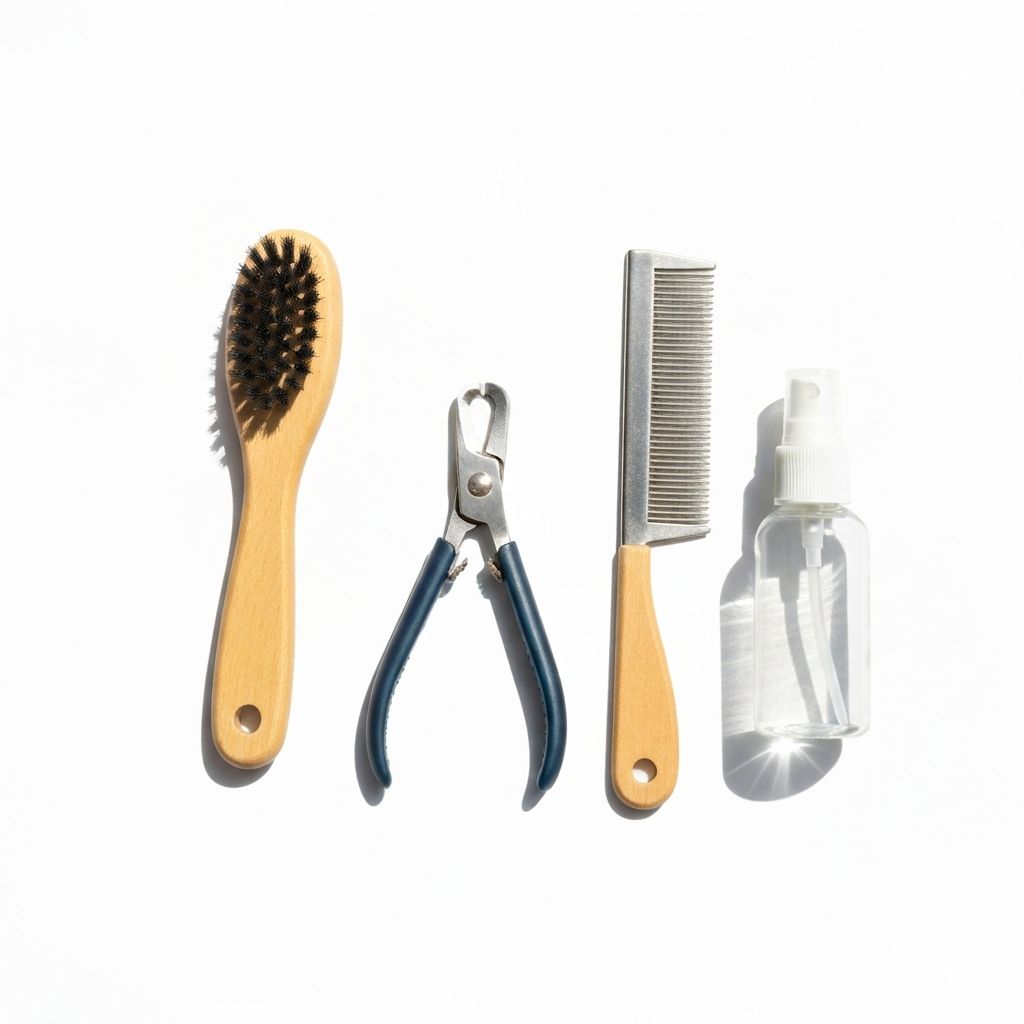
For short-coated guinea pigs, a soft-bristled brush or a rubber grooming mitt removes loose hair and stimulates the skin without discomfort. Brush in the direction the hair naturally lies — for most short-haired guinea pigs, that is back toward the tail.
For long-haired varieties, a soft pin brush or a wide-toothed comb is more appropriate. Work through the coat gently from the tips inward toward the skin, untangling small sections at a time rather than dragging through from root to tip. Pay particular attention to behind the ears, the underside, and the area around the back end where long coat can trap bedding debris and faecal matter.
Some long-haired guinea pigs benefit from keeping the hair around the back end trimmed shorter, particularly during warm weather. This is purely practical — it keeps them cleaner and makes hygiene easier to maintain. The full grooming guide covers this in more detail including how to approach a first trim.
Nail trimming: when and how
Nails grow continuously and need trimming every four to six weeks for most adult guinea pigs. Long nails catch on fabric bedding, can snag on cage bars, and may cause discomfort when walking. In severe cases, overgrown nails can curve back and grow into the pad.
Use small animal nail clippers — not human nail scissors. Look for the quick, the pink blood vessel that runs inside the nail. On light-coloured nails it is clearly visible; on dark nails it requires more care. Clip only the tip of the nail, well clear of the quick. If you clip the quick, it will bleed; have a small amount of cornflour or styptic powder to hand to stop the bleeding.
Many guinea pigs are calmer for nail trimming when wrapped gently in a towel so they feel secure. Work methodically through each paw — there are four toes on each front foot and three on each back foot. Our dedicated nail clipping guide has the step-by-step approach in full.
Bathing: rarely needed, often overdone
Guinea pigs groom themselves effectively and a healthy guinea pig in a clean enclosure very rarely needs a bath. Bathing strips the natural oils from the coat and skin, can cause stress, and in cold conditions can lead to chilling.
The occasions when bathing is genuinely appropriate include: a guinea pig who is significantly soiled and cannot clean themselves (elderly or mobility-limited pigs); skin conditions where a medicated wash has been prescribed by a vet; or specific parasite treatments. For routine care, spot cleaning with a damp cloth is almost always sufficient.
If a bath is necessary, use only guinea pig-safe shampoo — not human shampoo, baby shampoo, or any product not designed for the species. Use warm (not hot) water, keep the session short, and dry the guinea pig thoroughly and gently in a warm room. Do not use a hairdryer directly on the animal.
The five-point coat and skin check
Incorporating a quick skin and coat check into grooming sessions catches problems early. Combine this with your daily care checks for the most reliable picture of each animal's condition.
- Check for bald patches or thinning. Any unexpected hair loss warrants investigation. See our article on hair loss causes for what to look for.
- Check the skin underneath. Part the coat and look at the skin surface. It should be clean and a normal skin colour. Redness, flakiness, crusty areas, or spots are not normal.
- Check for parasites. Look for any movement in the coat, or black specks (which can indicate mite faeces). Mites themselves are microscopic, but their effects — intense scratching, irritated skin — are visible.
- Check the back end. Clean and dry. Persistent soiling around the back end is a welfare concern and often a sign of digestive issues or mobility limitations.
- Check behind and inside the ears. Clean, no discharge, no odour, no excessive wax build-up. Dirty ears with odour may indicate infection.
If anything in this check concerns you, the health page is a good place to triage next steps.
Frequently asked questions
How do I get my guinea pig to tolerate grooming?
Start with very brief sessions using a soft brush, during a time when the guinea pig is already calm. Offer a small piece of vegetable to associate the process with something positive. Gradually increase the duration as tolerance builds. Never restrain a guinea pig forcibly for grooming — a distressed animal learns to dread the brush.
Can I use human or cat shampoo on a guinea pig?
No. The pH of guinea pig skin is different from that of humans or cats, and products not designed for them can cause irritation. Use only guinea pig-specific products or products your vet has recommended.
My guinea pig has matted fur. What should I do?
Small mats can often be worked out gently with a wide-toothed comb, working from the tip inward. Larger or very tight mats may need to be carefully cut out with blunt-ended scissors. If the mat is close to skin, or the animal is distressed, a vet or experienced groomer is the safer option.
Do boars need any specific grooming?
Older boars often accumulate a build-up of dried secretions in the grease gland at the base of the back — a circular area of skin that can become gunky over time. It smells unpleasant and needs occasional cleaning with a small amount of coconut oil or a specific product. Not all boars need this regularly, but it is worth knowing about.