
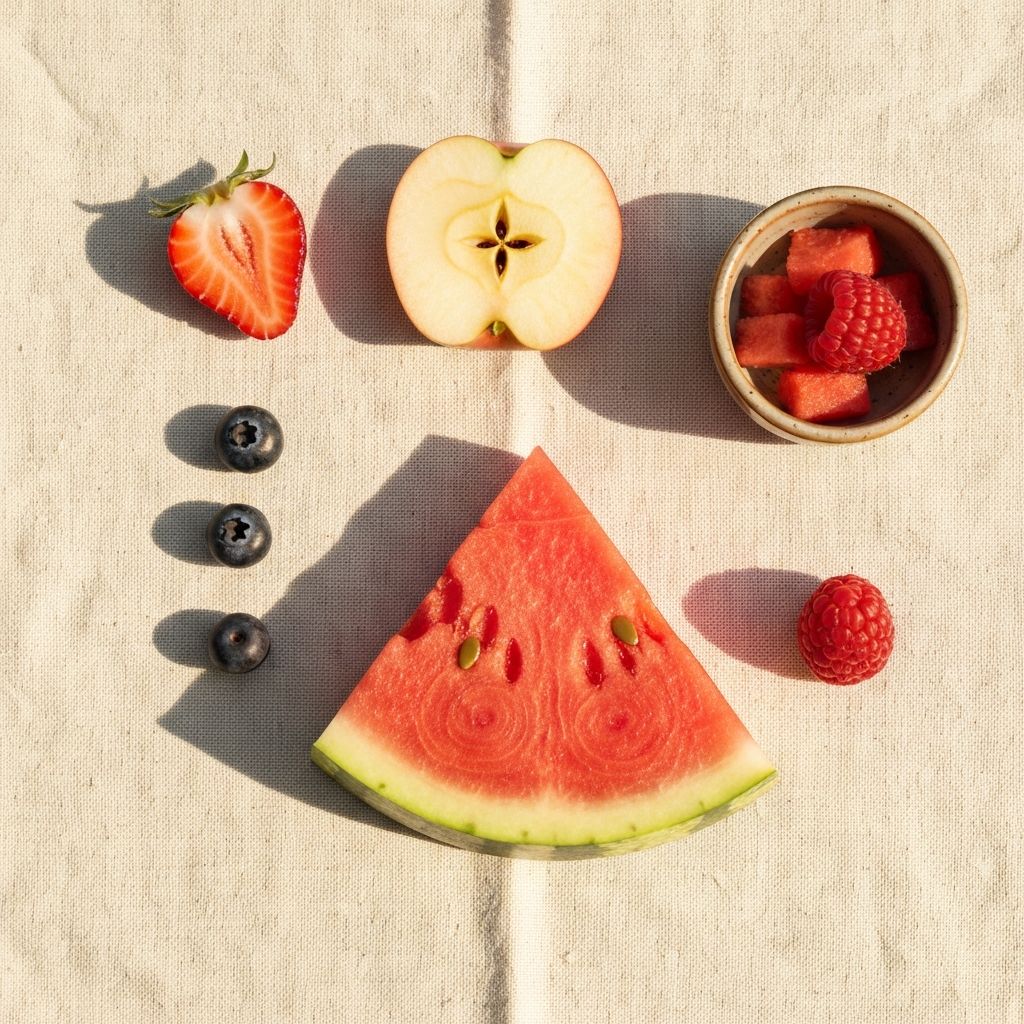
Guinea pigs can eat a small selection of fresh fruit as an occasional treat — not as a daily staple. Fruit is too high in sugar to form any meaningful part of their diet. The safest options include strawberries, blueberries, apple (without seeds), and watermelon, offered in thumbnail-sized portions no more than two or three times a week.
Fruit is a treat, not a food group
Before the list, the honest context: fruit is not something guinea pigs need. Their diet is built around hay — unlimited, all day, every day — supported by fresh leafy vegetables and a small measured portion of pellets. If you follow a sensible guinea pig feeding guide, fruit barely registers as a daily concern.
The problem is that fruit is sweet, guinea pigs enjoy it, and it is easy to overfeed without realising. High sugar intake contributes to digestive upset, soft stools, and weight gain over time. Fruit should function more like a reward than a regular food — something offered occasionally, in a portion a guinea pig could demolish in under a minute.
Safe fruits: portions and frequency
These are the fruits that work reliably in small amounts. All should be washed, served at room temperature (not cold from the fridge), and offered without pips, stones, or tough stalks.
| Fruit | Safe portion | Frequency | Notes |
|---|---|---|---|
| Strawberry | 1 small berry | 2–3x per week | Good vitamin C source; remove stalk |
| Blueberry | 2–3 berries | 2x per week | Low acid; fine for most pigs |
| Apple | One thin slice | 2x per week | Remove pips and core entirely |
| Watermelon | Thumbnail-sized piece | 2x per week | Remove seeds; rind is fine in tiny amounts |
| Melon (cantaloupe) | Small cube | Once a week | Higher sugar; limit accordingly |
| Pear | One thin slice | 2x per week | Remove pips; quite sugary |
| Raspberry | 1–2 berries | 2x per week | Low sugar relative to other fruits |
| Peach | Very small piece of flesh | Once a week | Remove stone completely — see our note on can guinea pigs eat peaches |
| Kiwi | Teaspoon of flesh | Once a week | Excellent vitamin C but quite acidic |
| Mango | Small cube | Once a week | High sugar; very occasional treat |
Fruits to limit and fruits to avoid
Limit these
Grapes and bananas are popular with guinea pigs but are significantly higher in sugar than most other fruits. Grapes should be quartered and offered rarely — not more than once a week at most. Bananas should be a very occasional sliver rather than a regular treat. Citrus fruits like oranges are technically safe in small amounts but high acidity can cause mouth soreness, so most owners find it simpler to choose alternatives.
Avoid entirely
Rhubarb is toxic to guinea pigs and should never be offered. Avocado is dangerous. Any fruit with a pit or stone should be stripped completely before offering the flesh — this includes cherries, plums, apricots, and peaches. The pips of apples contain trace amounts of cyanogenic compounds; they are not worth the risk when removing them takes two seconds.
How to prepare and serve fruit safely
Wash everything, even fruit labelled organic. Serve at room temperature, not straight from the fridge — cold food can cause digestive upset. Remove any seeds, pips, stones, or tough outer rinds. Cut into pieces small enough that the guinea pig eats it quickly and you can see how much was consumed.
Remove uneaten fruit from the enclosure after an hour or so. Fermenting fruit sitting in warm bedding is a hygiene problem and will attract flies.
What happens if a guinea pig eats too much fruit
The most immediate sign is usually soft or looser-than-normal droppings. If you notice your guinea pig has raided an accidental supply or been overfed fruit, pull it from the diet entirely for a few days and return to hay, water, and plain leafy greens. Most mild digestive upsets resolve this way without vet intervention.
If soft stools persist beyond 24–48 hours, the guinea pig stops eating, or you notice any other concerning signs, contact an exotics-savvy vet. Prolonged digestive disruption in guinea pigs can escalate quickly. Our guide to signs of diarrhoea in guinea pigs covers what to watch for and when it becomes urgent.
A note on vitamin C and fruit
Guinea pigs cannot synthesise their own vitamin C, so they rely on fresh food sources. While some fruits — strawberries, kiwi, and melon — do provide useful vitamin C, vegetables are generally better sources and lower in sugar. Red and yellow bell pepper is probably the most efficient vitamin C food you can offer, and it is something guinea pigs can eat every day without the sugar load that fruit carries.
Do not rely on fruit to cover your guinea pig's vitamin C requirements. Use it as a treat on top of an already varied diet. For a fuller picture of what guinea pigs should eat every day, the daily diet article breaks down the whole routine.
Frequently asked questions
Can guinea pigs eat fruit every day?
Not ideally. Fruit is high in sugar and should be an occasional treat rather than a daily component of the diet. Two to three small portions per week of a low-sugar fruit is plenty for most healthy adult guinea pigs.
What is the best fruit for guinea pigs?
Strawberries and raspberries are among the most reliable choices — they are relatively low in sugar compared to bananas or grapes, provide some useful vitamin C, and most guinea pigs enjoy them. Small portions of apple and watermelon also work well.
Can guinea pigs eat frozen fruit?
It is better to avoid frozen fruit, or at minimum to thaw it fully to room temperature first. Cold food can shock the digestive system. Fresh is always preferable.
Can baby guinea pigs eat fruit?
Young guinea pigs have more sensitive digestive systems. It is sensible to hold off on fruit altogether until they are at least three to four months old and have a well-established hay-based diet.
My guinea pig refused a fruit I offered. Is that normal?
Very normal. Guinea pigs have individual preferences and some are naturally more cautious about new foods. There is no obligation to offer fruit at all — it adds nothing nutritionally that a good vegetable selection cannot cover.