
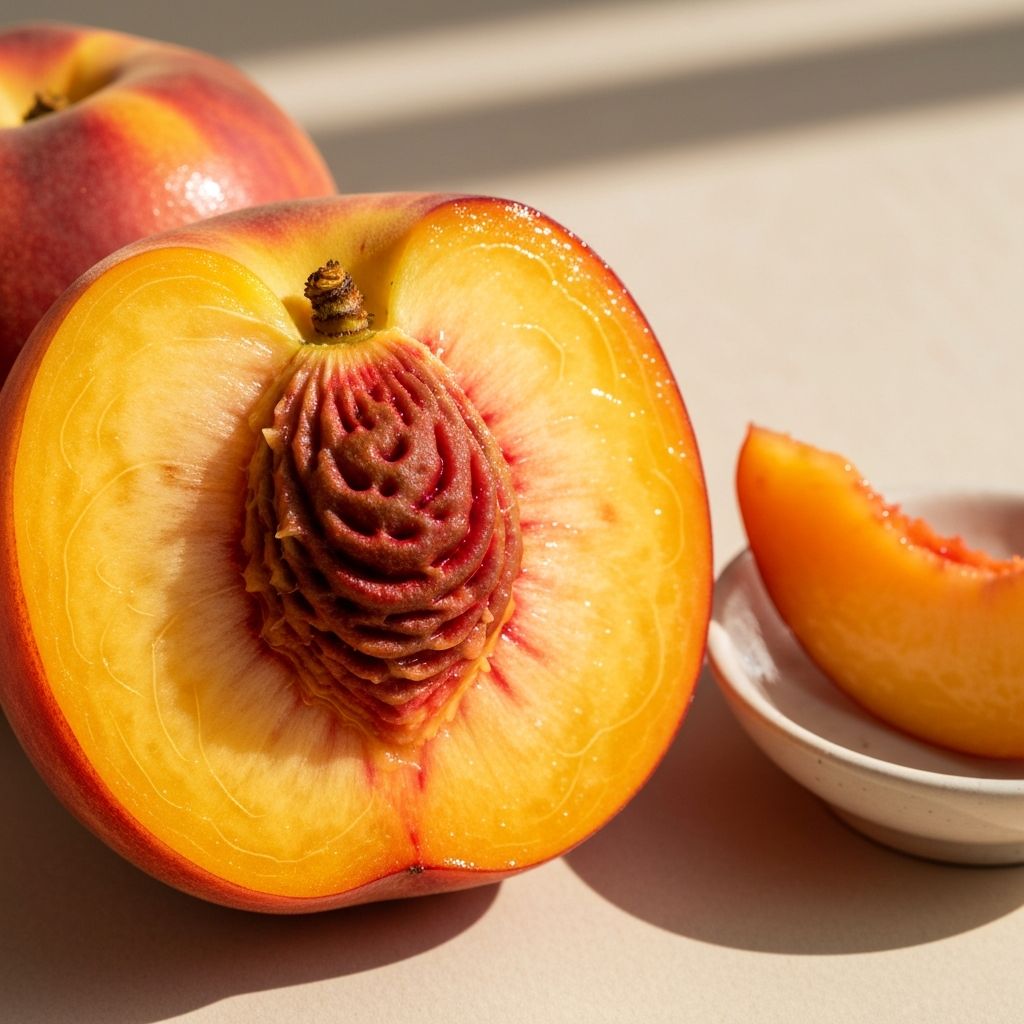
Yes, guinea pigs can eat peach flesh in very small portions. The stone must be removed completely — it contains compounds that are harmful if chewed. The skin is technically edible but can be difficult to digest; removing it is safer. Peaches are high in sugar, so keep portions small and offer them no more than once a week at most.
Are peaches safe for guinea pigs?
The flesh of a ripe peach is safe in small amounts. It contains some vitamin C and fibre, and most guinea pigs find it appealing. The issue is not toxicity — it is sugar content and portion discipline. Peaches are noticeably sweeter than berries or apple, and regular offerings add up to a meaningful amount of dietary sugar.
For context on how peaches sit within a wider best fruits for guinea pigs overview, they fall into the "occasional, small portion" category alongside mango and melon — enjoyable in moderation, not a routine staple.
The stone: remove it completely
The peach stone — the hard pit at the centre — must be removed before offering any peach to a guinea pig. Peach stones contain amygdalin, a compound that can release cyanide when broken down. A guinea pig will attempt to gnaw through a stone if given the chance. Do not leave this to chance. Remove the stone, discard it, and only then cut the flesh.
This applies to all stone fruits: plums, apricots, cherries, nectarines. The fruit flesh is generally fine in small amounts; the pit is not.
What about the skin?
Peach skin is not toxic, but it is fibrous, can carry pesticide residue, and is harder for guinea pigs to digest than the flesh. If you do leave the skin on, wash the peach thoroughly under running water first. If you prefer the simpler approach, peel it. Either way is acceptable as long as the stone is gone and the portion is small.
How much peach is a safe portion?
| Detail | Guidance |
|---|---|
| Safe part | Flesh only (skin optional, washed) |
| Unsafe parts | Stone / pit — remove entirely |
| Portion size | Very small piece — roughly 1–2cm cube of flesh |
| Frequency | Once a week maximum for healthy adult pigs |
| Temperature | Room temperature, not cold from the fridge |
| Preparation | Stone removed, washed, cut into small pieces |
When to skip peaches
A guinea pig with a history of digestive sensitivity, loose stools, or weight concerns is better served by skipping fruit treats altogether or choosing lower-sugar options like raspberries or strawberries. Peaches, being sweeter and juicier than most berries, are more likely to trigger soft stools in sensitive animals.
If you introduce peach for the first time and notice signs of digestive upset — very soft droppings, reduced appetite, or an unusually still guinea pig — pull it from the diet and offer plain hay and water for 24 hours. Most mild reactions resolve without intervention.
Safer alternatives with better nutrition
If you want to offer fruit that also contributes to vitamin C-rich foods in the diet, strawberries and kiwi are both better choices than peach. Strawberries are lower in sugar and provide useful vitamin C. Kiwi is excellent for vitamin C but should be offered in very small amounts due to its acidity.
For a complete picture of the daily daily diet plan, where fruit sits in context alongside hay, pellets, and vegetables, the daily feeding article has the full breakdown.
Frequently asked questions
Can guinea pigs eat canned or tinned peaches?
No. Tinned fruit is typically preserved in syrup or juice that is high in sugar and often contains additives. Only fresh fruit is appropriate for guinea pigs.
Can guinea pigs eat nectarines?
Yes, on the same basis as peaches — remove the stone completely, wash the skin or peel it, and offer only a very small amount of flesh occasionally. Nectarines are slightly lower in sugar than peaches.
My guinea pig ate a tiny amount of peach stone. What should I do?
A very small amount is unlikely to cause immediate harm, but contact an exotics vet for advice rather than waiting to see what happens. Do not attempt to induce vomiting — guinea pigs cannot vomit.
How often can I give peaches?
Once a week at most for a healthy adult guinea pig, in a very small portion. On the other six days, vitamin C needs are better served by fresh vegetables rather than fruit.