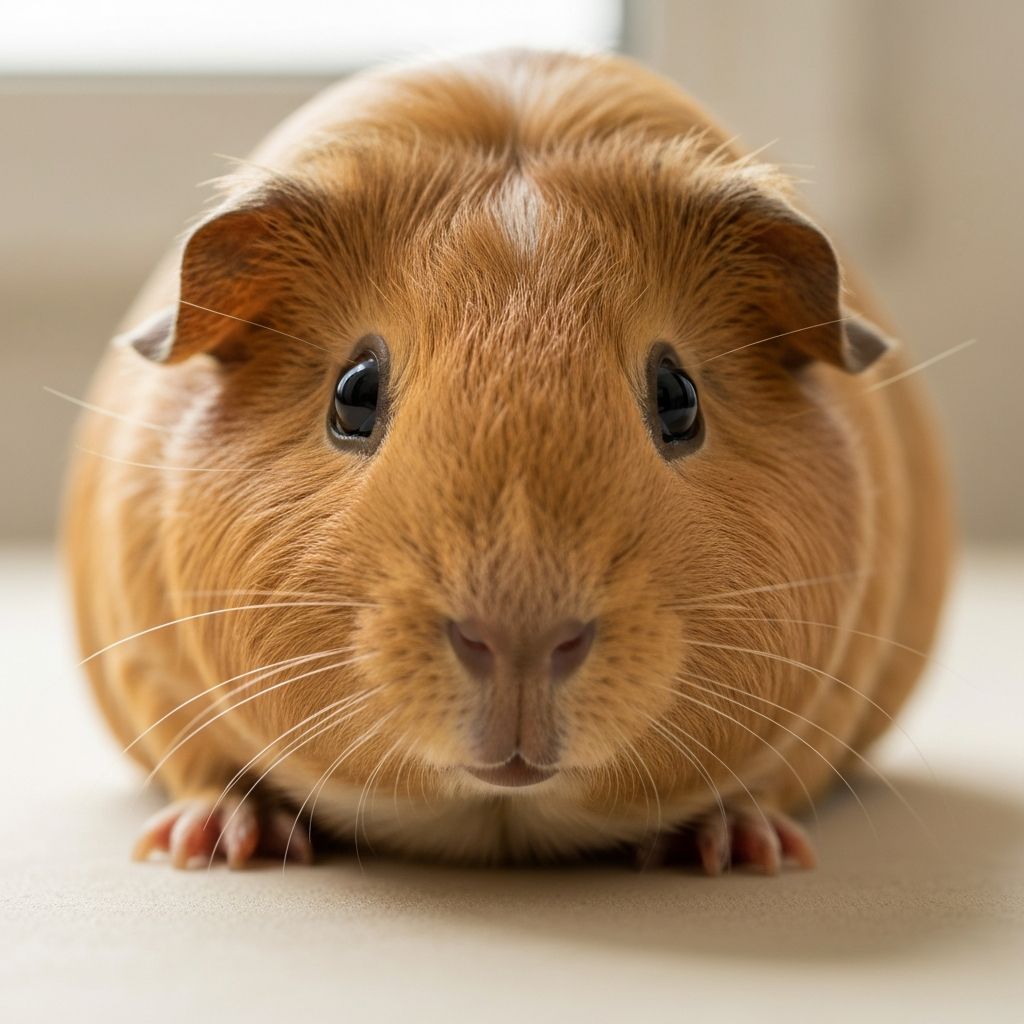
Guinea pig eyes should be bright, clear, and fully open. Any redness, discharge, cloudiness, squinting, or swelling around the eye is a sign that something needs attention. Most eye problems in guinea pigs are treatable when caught early — but eyes are not somewhere to apply home remedies or wait several days to see if they improve on their own.
What healthy guinea pig eyes look like
Healthy eyes are bright and dark, with a clear surface and clean surrounding skin. A small amount of crusty material at the inner corner after sleep is normal and can be gently wiped away with a clean damp cloth. The eye should open fully and the guinea pig should not be squinting or pawing at their face.
Making eye condition part of your routine daily check — alongside appetite, droppings, and general behaviour — is one of the most reliable ways to catch problems early. The daily checks section of the general care guide explains how to build this into a practical habit.
Common eye problems and their signs
| Symptom | Possible cause | Urgency |
|---|---|---|
| Watery discharge, one eye | Hay or dust irritation, early infection | Vet if not resolved quickly |
| Thick yellow/green discharge | Bacterial infection | Vet promptly |
| Red or pink whites of eye | Conjunctivitis, injury, infection | Vet same day |
| Cloudiness or white area on eye | Cataract, ulcer, or serious infection | Vet urgently |
| Squinting or pawing at face | Pain, foreign body, scratched surface | Vet same day |
| Swelling around the eye socket | Abscess or dental root issue | Vet urgently |
| Eye appearing sunken or smaller | Pain, dehydration, or serious illness | Vet urgently |
Hay, dust, and bedding irritation
Fine hay dust or loose bedding particles are a common cause of mild eye irritation — a watery eye, slightly red at the edges. Switching to better quality, less dusty hay often helps. Choosing safe bedding options that do not create fine particulate matter reduces this risk considerably. If the eye remains watery or worsens after 24 hours, see a vet rather than continuing to monitor.
Conjunctivitis
Bacterial conjunctivitis produces redness, swelling of the eyelids, and discharge that may be clear initially before becoming thicker. It can affect one or both eyes. It requires antibiotic eye drops from a vet — not human eye drops, not saline rinses as the primary treatment. Conjunctivitis that spreads to both eyes or does not improve within 48 hours of treatment needs a follow-up check.
Eye scratches and ulcers
The surface of the eye — the cornea — can be scratched by hay, bedding, or a scuffle with a cagemate. A scratched cornea is painful and the guinea pig will squint or paw at the affected eye. This looks like minor irritation from the outside but can worsen rapidly without treatment. An antibiotic eye preparation that also supports healing is usually prescribed.
Cataracts
A whitish, cloudy appearance to the eye itself — not around it, but on the lens — can indicate cataracts. These are more common in older guinea pigs and in those with diabetes-like metabolic conditions. Cataracts are not painful in themselves, but they do impair vision. A pig with reduced vision benefits from a stable, unchanged environment and consistent handling approach.
Dental-related eye issues
This one surprises many owners: dental problems in guinea pigs — overgrown or infected tooth roots — can cause swelling, discharge, and watering around the eye because of the proximity of the dental roots to the eye socket. If eye problems are accompanied by changes in chewing, weight loss, or drooling, the cause may be dental rather than ocular. This requires specialist assessment.
What you can safely do at home
You can gently wipe away discharge from the corner of the eye using a clean damp cloth or cotton pad, using a separate one for each eye. You can improve bedding quality and hay type to reduce dust exposure. You can note the symptoms carefully and contact a vet. That is the limit of safe home management for eye problems in guinea pigs. Do not apply human eye drops, saline solutions, or any over-the-counter preparation without veterinary guidance. The eye is not a place to experiment.
Keep the enclosure cleaning routine regular — a clean environment reduces the bacterial load that contributes to eye infections. Alongside reading about grooming and face checks, regular cleaning makes a real difference to eye health.
When not to wait
Contact an exotics vet the same day if: the eye is cloudy or has a white area on the surface; there is thick, coloured discharge; the guinea pig is squinting and will not open the eye fully; there is any visible swelling around the eye socket; or the affected eye appears smaller or sunken than the other one. Read the health guide for the broader framework for triage decisions.
Frequently asked questions
Can guinea pigs get conjunctivitis from each other?
Some bacterial causes of conjunctivitis can spread between guinea pigs sharing an enclosure. If one pig develops an eye infection, monitor others closely. Wash hands between handling animals.
Are there breeds more prone to eye problems?
Rex and some shorter-faced guinea pig varieties can be slightly more prone to eye irritation due to coat type or face structure, but eye problems can occur in any breed and are mostly related to environment and age.
My guinea pig has a milky film over their eye but seems fine. Is it urgent?
Any cloudiness or white area on the eye surface warrants same-day vet contact. Corneal ulcers and cataracts can look similar from a distance. A guinea pig that "seems fine" with a cloudy eye may still be experiencing pain — guinea pigs hide discomfort very effectively.
Can I use human saline eye wash?
Not as a treatment. Gentle rinsing to remove loose debris before a vet visit might be appropriate in some cases, but this does not replace vet assessment, and the wrong approach can introduce further irritants.