Guinea pigs do not bite out of spite. They bite because something has triggered fear, pain, discomfort, or a misread social signal — and they had no other option available in the moment. Understanding the reason behind a bite is more useful than reacting to the bite itself. Most guinea pigs that bite regularly can be worked with, provided the underlying cause is identified and addressed.
The main reasons guinea pigs bite
Fear and lack of trust
This is the most common reason. A guinea pig who is new, who has been handled roughly in the past, who is lifted suddenly without warning, or who is simply not yet comfortable with the person picking them up, may bite as a last resort when they feel they cannot escape. The bite is not aggression in the conventional sense — it is panic.
A guinea pig who bites when being picked up is usually one who has tried several other strategies first — freezing, vocalising, struggling — and found that none of them worked. The advice for settling new guinea pigs includes how to build familiarity before handling becomes part of the routine.
Pain or illness
An otherwise gentle guinea pig who suddenly starts biting during handling — particularly in a specific area — deserves a closer look for injury or illness. A pig with a skin condition, an abscess, joint pain, or an internal problem may bite when a hand touches a painful spot, not because they have become aggressive, but because they are in pain and communicating it the only way available. If a previously calm pig bites suddenly and repeatedly, contact an exotics vet rather than assuming it is a training issue. The health guide covers the warning signs that accompany illness-related behaviour changes.
Hunger mistaken for a hand
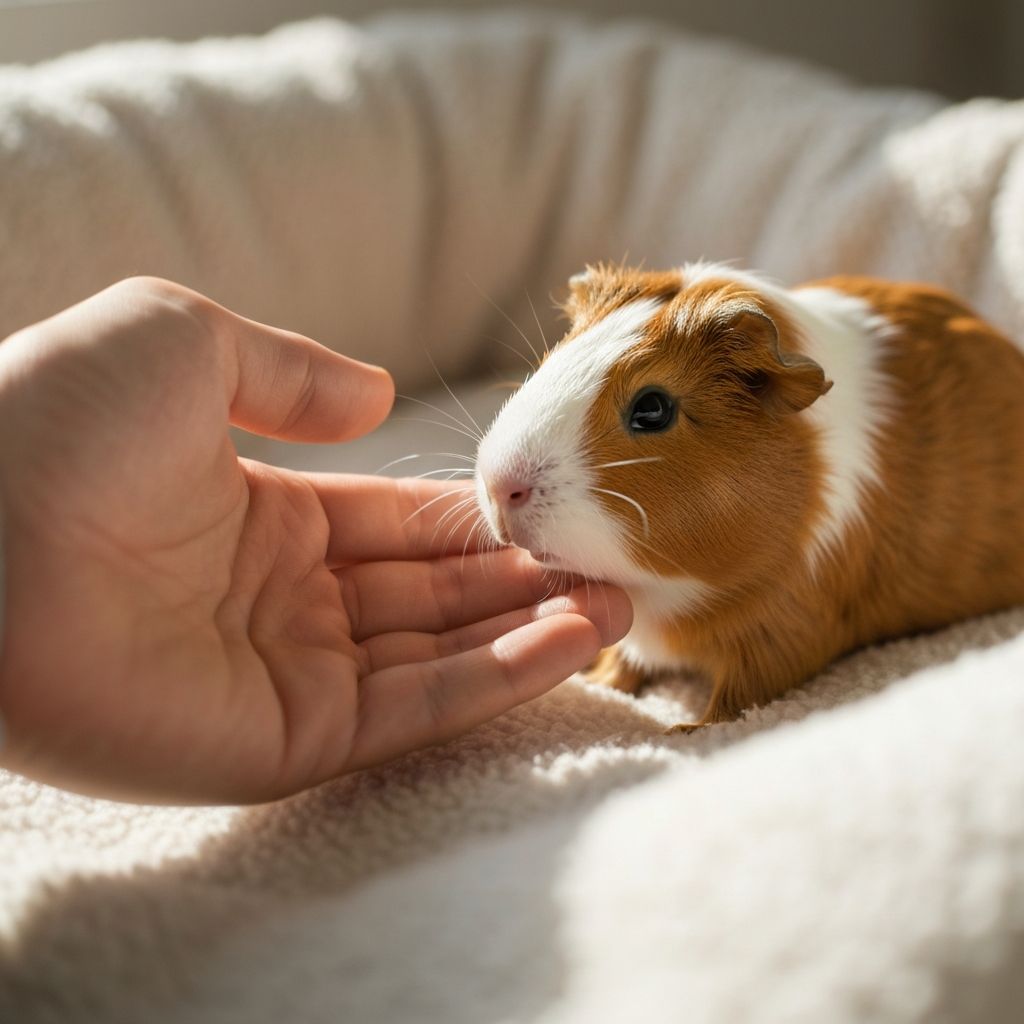
This is particularly common with new owners. Guinea pigs associate hands with food delivery. A hand that smells of fruit, vegetables, or anything interesting will be investigated with the mouth. This is not a real bite — it is a gentle exploratory nibble — but it can surprise people. Washing hands before handling reduces it significantly.
Hormonal behaviour
Intact boars going through periods of hormonal assertiveness, and sows who are in heat, can become less tolerant of handling. Hormonal biting tends to be more assertive than fear-based biting and may be accompanied by teeth chattering or rumblestrutting. It is usually temporary and does not indicate a broken relationship with the animal.
Overstimulation
Some guinea pigs have a tolerance threshold for being touched or held. Once that threshold is crossed, they communicate the need to stop — through fidgeting, vocalising, and eventually a nip. Learning to read the earlier signals (see below) prevents the threshold from being reached.
Body language that predicts a bite
Guinea pigs nearly always give warnings before biting. The problem is that the warnings are easy to miss if you are not looking for them. Knowing the full picture is what the warning sounds and body language article covers in detail. Key pre-bite signals include:
- Teeth chattering (a rapid click-clack sound) — direct warning; stop what you are doing
- Freezing completely still under your hand — not relaxation, tension
- Head turning toward your hand without moving away
- Increasingly rapid breathing
- Twitching skin or coat rippling
- Low rumble or deep vocalisations
| Signal | What it means | Response |
|---|---|---|
| Teeth chattering | Direct warning: I am about to bite | Stop immediately and give space |
| Freezing stiff | Fear or tension, not calm | Stop handling and let them settle |
| Rumble vocalisations | Annoyance or dominance communication | Reduce stimulation or end session |
| Twisting or struggling | Wants to leave; feels unsafe | Support them properly and put down calmly |
| Nudging hand away with nose | Gentle first warning to stop touching | Respect it and pause |
How to handle safely and build trust
Consistent, predictable, gentle handling builds trust over time. The key elements: always approach from the front so the guinea pig can see you coming; allow them to sniff your hand before attempting to pick them up; support their full body weight when holding them — a guinea pig who feels unsupported feels unsafe; keep handling sessions short with new or nervous animals; end sessions before the guinea pig signals they want to stop.
Floor time in a safe, enclosed space rather than being held is often less stressful for nervous guinea pigs and allows them to approach on their own terms. More on building this kind of routine is covered in the handling and routine care guide.
Mistakes that make biting worse
Pulling your hand away sharply when bitten startles the guinea pig further. Reacting loudly or in a way that frightens them teaches them that biting produces an alarming response, which is not helpful for building trust. Forcing handling on a guinea pig who is clearly communicating distress makes future biting more likely, not less. Persisting through clear warning signals overrides the animal's ability to communicate at all — and removes their last option before biting.
Frequently asked questions
My guinea pig has never bitten before and suddenly bit hard. What should I do?
A sudden change in bite behaviour — particularly if the bite was in response to touching a specific part of the body — warrants a vet check before anything else. Pain or illness is a common cause of sudden biting in otherwise gentle guinea pigs.
Is it safe for children to handle guinea pigs that bite?
Supervised, calm floor-based interaction is generally safer than unsupervised handling for children working with nervous guinea pigs. Teach children to read body language and to let the guinea pig approach them rather than always going to the pig. Forced handling by children is a common trigger for biting.
How long does it take to build trust with a new guinea pig?
It varies considerably. Some guinea pigs settle within a couple of weeks; others take several months of patient, consistent interaction. There is no shortcut that does not involve some amount of backsliding. Slow progress is real progress.
My boar bites other guinea pigs, not me. Is this a separate issue?
Inter-pig biting is usually about social hierarchy and is distinct from human-directed biting. Some of this is normal; persistent, aggressive biting that causes injuries needs the group dynamic reviewed. Boar group introductions need to be done carefully.