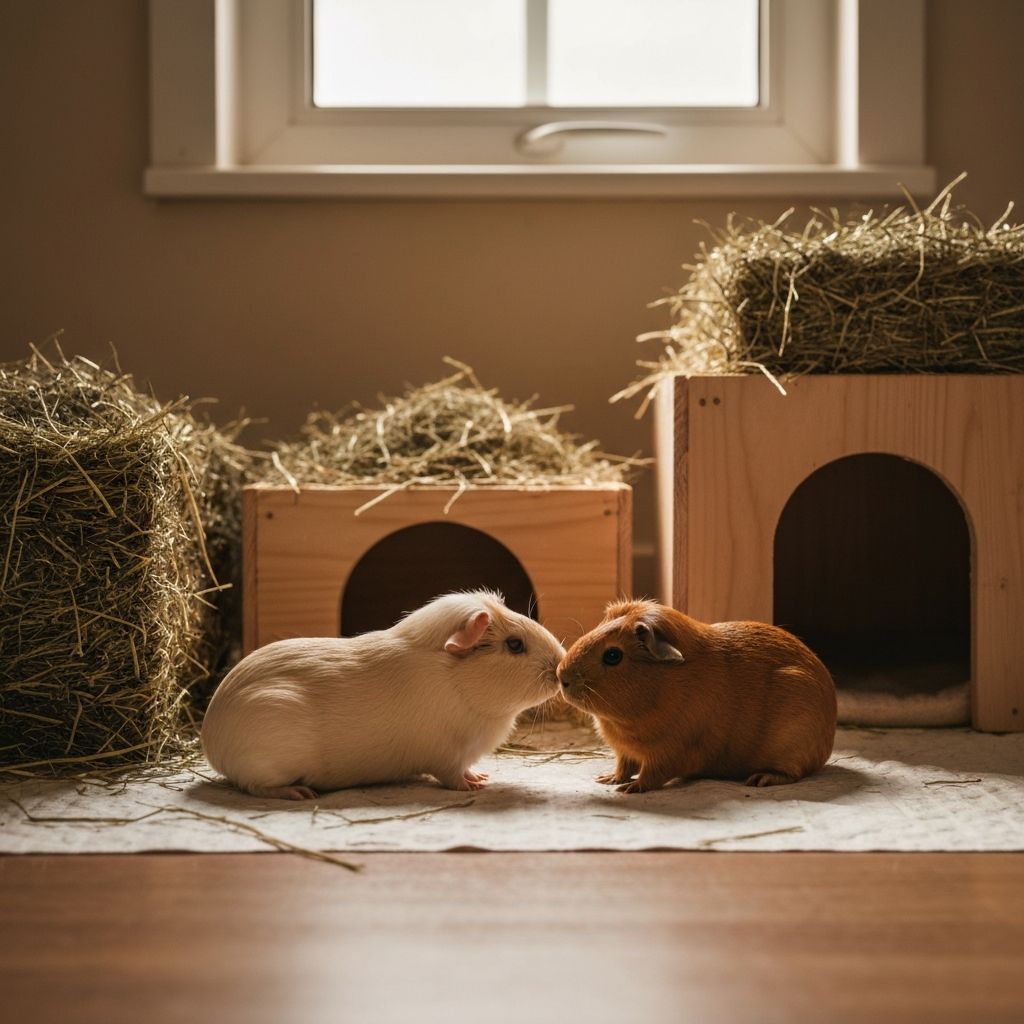
Arrival day is one of the most exciting moments in guinea pig ownership. It is also one of the most potentially overwhelming for the guinea pigs themselves. The single most useful thing you can do is make the day deliberately boring.
That does not mean cold or loveless. It means calm, prepared, and unhurried. Two nervous animals in a new space will settle much faster if nothing is demanding their attention except the fact that there is hay and somewhere to hide.
Before they arrive
The enclosure should be ready before you collect them, not assembled while they sit in a carrier listening to you swear at flatpack instructions.
Check that you have:
- the main enclosure set up with fresh bedding
- a large, generous hay supply already in place
- clean water available
- at least two hides with multiple exits each
- a quiet location away from heavy foot traffic, other pets, and loud noise
- a small first food offering of the vegetables they were eating before
If you are rehoming guinea pigs, ask the previous owner what they were eating. Keeping the food consistent in the first week reduces one variable in an already variable time.
The carrier journey
Keep the carrier dark, ventilated, and padded with hay. Short journeys are usually fine. Longer ones may call for some extra hay, a small piece of cucumber or leafy greens tucked in, and a gentle driving style.
Talk quietly if they seem distressed. Do not keep lifting the lid to check on them. Darkness is calming. The sound of a familiar voice in the background also helps.
When they arrive home
Put them straight into their prepared enclosure.
That is it.
Do not stop to introduce them to family members, show them around, or try to get them used to your hands in the first hour. Give them the enclosure, close the front quietly, and let them get on with it.
A guinea pig who arrives in a new home and immediately has a pile of hay to burrow into and a hide to disappear behind is processing the situation on their own terms. That is exactly what you want.
The first 24 hours
Keep it slow.
- Offer normal food without introducing anything unusual
- Keep noise levels low
- Let other pets see them briefly from a distance, then manage contact carefully
- Watch them from a distance and note whether they are exploring, eating, or hiding
- Do not try to handle them unless there is a welfare reason to do so
- Do not panic if they spend most of the first day behind a hide
Some guinea pigs are curious and out exploring within an hour. Others take a full day before they emerge properly. Both are normal. What you are looking for is that they are eventually eating, moving, and appearing to settle.
What counts as a red flag
A new guinea pig who is hiding is probably just being sensible. A new guinea pig who is not eating, barely moving, breathing differently, or seems limp or unresponsive is a different matter.
If your new pigs arrived from a reputable source, they should be healthy. But animals can arrive already unwell, or can be stressed into showing existing issues. Know the difference between nervous and unwell.
If you are concerned, call the person you got them from, and contact an exotics-savvy vet if the signs are genuinely worrying. Read more in Health.
The first week
Let the routine do the talking.
- Refresh hay, water, and food at the same times each day
- Sit quietly near the enclosure so they begin to associate you with calm
- Let them approach your hand in their own time
- Start very short, low-key handling sessions once they are eating well and moving freely
- Keep notes on droppings, appetite, and weight
The goal of the first week is not for them to be tame. It is for them to feel safe enough to be themselves in their new home. That is the foundation everything else builds on.