
Safe Herbs and Forage for Guinea Pigs: What to Pick and What to Avoid
Quick answer
Key facts
The best guinea pig treats are already growing in your kitchen pots and your lawn. Fresh herbs like coriander, basil, dill, mint and oregano, and garden forage like dandelions, plantain and fresh grass, make cheap, natural treats — as long as you pick from clean areas, wash everything, and know exactly what you are picking.
- Parsley is safe but high in calcium, so keep it to moderation.
- Never feed lawnmower clippings — they ferment and cause serious digestive trouble.
- Introduce one new herb or forage plant at a time, in small amounts.
- Never feed anything you cannot confidently identify.
Treats do not have to come out of a packet. Some of the best rewards you can offer a guinea pig are herbs from the kitchen windowsill and weeds your lawn produces for free — without the assumption that you want to buy seventeen more things.
This guide covers which herbs and forage plants are safe, the picking rules that keep free food from becoming an expensive vet visit, and the short list of plants that must never reach the enclosure. For the wider treat picture, start with our main guide to guinea pig treats.
Safe herbs
Coriander, basil, dill, mint and oregano in small amounts; parsley in moderation because of its high calcium.
Safe garden forage
Dandelion leaves and flowers, plantain (the lawn weed), cleavers, clover in moderation and fresh grass.
The picking rules
Only from areas free of pesticides, road spray and dog fouling. Wash everything, and introduce one new thing at a time.
Which fresh herbs can guinea pigs eat?
Coriander, basil, dill, mint and oregano are all safe in small amounts, fresh or dried. Their strong smell does a lot of work here — a tiny sprig registers as a proper event in a way a tiny piece of cucumber never will.
Parsley deserves its own sentence: it is safe and popular, but high in calcium, so keep it to moderation rather than a daily handful. Herbs are treats on top of the routine, not a replacement for the vegetables in the daily bowl — see best vegetables for guinea pigs for the everyday selection.
What garden forage is safe to pick?
Dandelion leaves and flowers are the classic — abundant, free and reliably popular. Plantain is another good one; to be clear, that is the flat-leaved lawn weed, not the banana relative. Cleavers (the sticky one that attaches itself to your trousers) are safe, and clover is fine in moderation.
Fresh grass, pulled or cut by hand, is excellent — guinea pigs are grass-eating animals, after all. What they must never have is lawnmower clippings. Mown grass starts fermenting almost immediately, and fermenting grass in a guinea pig's gut is a genuine emergency waiting to happen.
The picking rules
Free food comes with three conditions. First, pick only from areas you know are free of pesticides, weedkiller, road spray and dog fouling — a grass verge next to a busy road fails on at least two counts.
Second, wash everything before it goes in the enclosure, even from your own garden. Third, introduce one new plant at a time in a small amount, and watch how it goes down before making it a regular. This is the same gradual-introduction rule that applies to everything in the daily diet.
Plants to avoid completely
The onion family is off the menu in all its forms, which includes chives quietly growing in the herb pot. In the garden, the common offenders are buttercups, foxglove, ragwort, bindweed, and daffodils along with anything else that grows from a bulb.
The final rule matters most: never feed anything you cannot identify with certainty. A plant identification app is a starting point, not a guarantee — if you are not sure, the lawn will still be there tomorrow. And if a pig does eat something questionable, ring a vet rather than waiting to see what happens.
Making forage go further
A pinch of herbs or forage hidden through the hay pile turns a treat into an activity — the searching and sniffing is half the reward. It also keeps quantities honest, because a scattered pinch looks like more effort than it is.
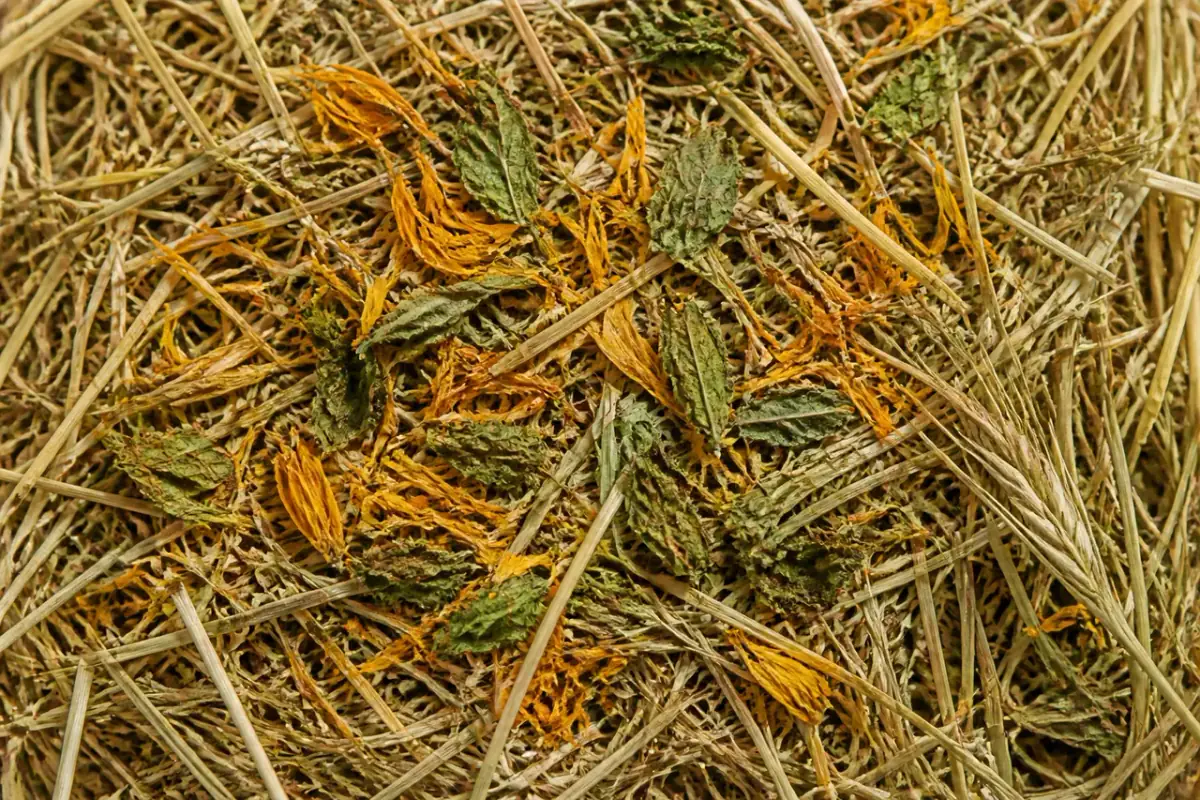
Dried versions of most safe herbs and forage plants work the same way and keep through winter, when the lawn has less to offer. The feeding guide covers how treats sit inside the wider hay-first routine.
Frequently asked questions
- Can guinea pigs eat grass from the lawn?
- Yes — fresh grass picked or cut by hand is one of the most natural foods you can offer, provided the lawn is free of pesticides, weedkiller and dog fouling. Never feed lawnmower clippings, which ferment quickly and can cause serious digestive problems.
- Can guinea pigs eat dandelions?
- Yes, both the leaves and the flowers, and most pigs are enthusiastic about them. Pick from clean areas, wash them, and introduce them gradually like any new food.
- How much parsley can a guinea pig have?
- Parsley is safe but high in calcium, so treat it as an occasional herb rather than a daily one — a sprig now and then rather than a bunch. Excess calcium over time is linked to bladder problems in guinea pigs.
- Can guinea pigs eat dried herbs and forage?
- Yes. Dried versions of safe herbs and forage plants — dandelion, plantain, mint and similar — make good treats, especially in winter. Keep portions small and scatter them through hay to make them last.
- What should I do if my guinea pig eats an unknown plant?
- Contact a vet rather than waiting to see what happens. Note what the plant looked like (a photo helps) and how much was eaten. Guinea pigs can deteriorate quickly, so early advice is always the safer option.