
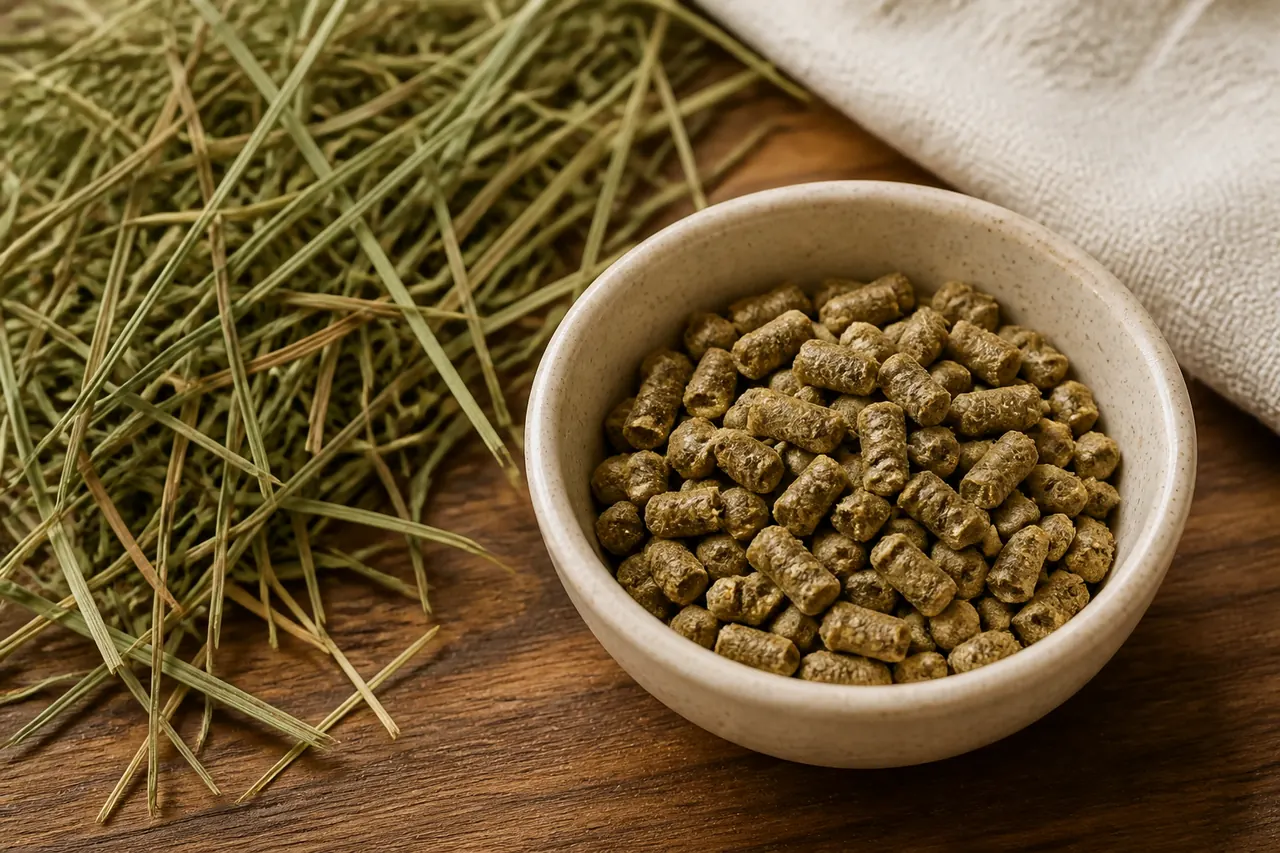
Guinea Pig Pellets: How to Choose the Best Option
Quick answer
Key facts
Choose species-specific, uniform guinea pig pellets with suitable fibre and vitamin C. Give a measured daily amount — hay remains the main food, not the pellet bowl.
- Avoid colourful muesli mixes that encourage selective eating.
- Check ingredients, fibre, vitamin C and calcium on the label.
- Use a measured portion (about one tablespoon per adult is a common guide).
- Store sealed, cool and dry; introduce new formulas gradually.
Choosing the right guinea pig pellets can feel confusing when packs make similar claims about nutrition, fibre and added vitamins. The best way to compare them is to look beyond the front of the bag and check the formulation itself.
A good-quality guinea pig food should complement the wider diet rather than dominate it. Check the ingredient list, fibre level, vitamin C, calcium content and overall formulation to determine whether the product is a suitable choice for your pet. For the full daily pattern, see what guinea pigs should eat every day and the main feeding guide.
Species-specific
Choose food formulated for guinea pigs — rabbit mixes are not interchangeable, especially for vitamin C.
Skip muesli mixes
Uniform pellets reduce selective eating so the nutrition on the label matches what is actually eaten.
Measured portions
About one tablespoon per adult is a common guide — hay stays the main food, not the pellet bowl.
What Should Guinea Pig Get From Their Daily Food?
Start by checking whether the product has been formulated specifically for guinea pigs. Foods designed for rabbits or other small animals should not automatically be treated as interchangeable because guinea pigs have their own nutritional requirements, including a dietary need for vitamin C.
The next step is to turn the pack around and read what is actually in it.
- Confirm the species and life stageCheck that the pack is for guinea pigs and matches age guidance before comparing brands.
- Read fibre, vitamin C and calciumPrefer plain uniform pieces and clear nutritional analysis over “premium” front-of-pack claims.
- Measure, store and transitionGive a fresh daily portion, keep the bag sealed cool and dry, and change formulas over two to four weeks.
Choose a Simple, Uniform Formula
Look for plain, consistently shaped pieces rather than colourful muesli-style mixtures containing seeds, flakes, dried fruit and different components.
Uniform food helps prevent selective eating. With mixed products, an animal may repeatedly choose its favourite pieces and leave the others behind. This means the carefully calculated nutrition in the complete mixture may not be what the animal actually consumes.
A simple appearance may therefore be more useful than a product designed to look varied or colourful.
Read the Ingredient List
The ingredient list helps you understand what makes up the product rather than relying on marketing claims on the front of the pack.
For healthy adults, look for an appropriate grass-based formulation. Timothy grass is commonly used in adult guinea pig foods, while alfalfa or lucerne may appear in products intended for different nutritional requirements or life stages. That distinction also matters when choosing types of hay.
Also look at the nutritional analysis. Fibre, protein, fat and calcium content can help you compare one formula with another.
Claims such as "premium" or "high fibre" are less useful on their own than the actual nutritional information provided by the manufacturer.
Check the Vitamin C
Some formulas use stabilised vitamin C, which is designed to retain its potency better during the product's shelf life. When comparing pellets, this can be a useful detail to look for alongside the overall formulation.
Remember that the amount supplied through pellets depends on the serving size too. A higher figure on the label does not automatically make one product the better choice, so vitamin C should be considered as part of the complete nutritional profile. Fresh produce still matters — see our vitamin C guide.
Vitamin C also deteriorates with storage and exposure to air, heat and light. This makes freshness important when choosing both the product and pack size.
Look Beyond Added Extras
Seeds, dried fruit, brightly coloured pieces and added sugary ingredients are not necessary to make a product nutritionally appropriate.
Instead, look for a straightforward formulation that makes it easy to control what your pet consumes.
If your guinea pig has a particular health condition, especially one affecting the urinary system or weight, seek veterinary advice before choosing food based solely on one nutrient such as calcium or protein.
How Pellets Fit Into a Healthy Guinea Pig Diet
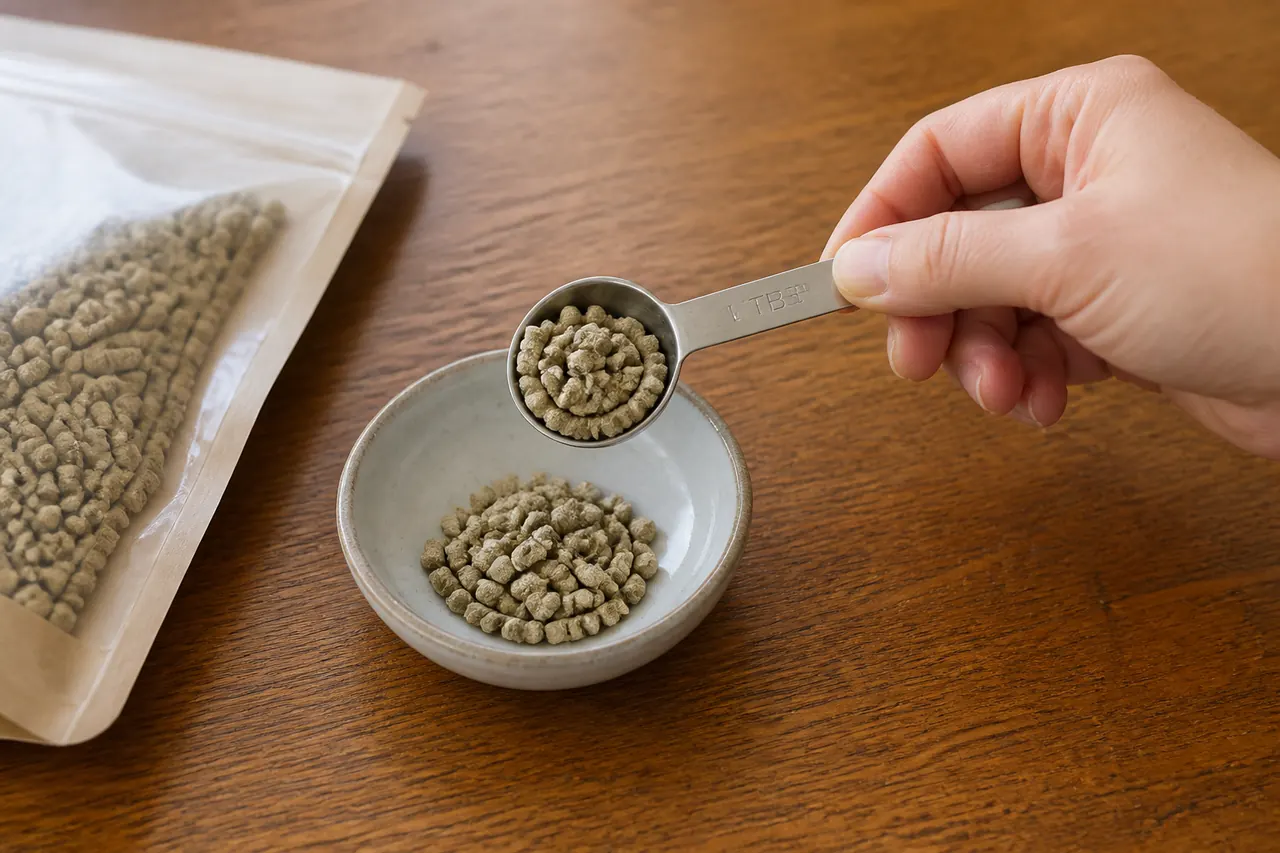
Even a nutritionally complete dry product should only occupy a defined place in the overall pig diet.
Hay remains the major component because guinea pigs require a high-fibre diet and spend long periods grazing. Fresh vegetables contribute variety and nutrients, while fresh water needs to remain continuously available. PDSA recommends unlimited hay and grass alongside a small daily amount of species-specific dry food and fresh produce.
This is why simply filling the bowl whenever it looks empty is not the best approach.
How Much Should You Give?
Use a measured amount rather than providing unlimited access.
PDSA currently recommends around one tablespoon per adult guinea pig per day, while the RSPCA advises following the manufacturer's instructions because requirements can differ.
The exact amount may need to change according to age, body condition, health and the nutritional concentration of the particular formula.
Regularly monitor your animal's weight and eating habits as part of routine care. If a guinea pig is consistently gaining or losing weight, do not simply alter one part of the diet without considering everything being consumed.
Why More Is Not Necessarily Better
Dry food is concentrated, so increasing the quantity does not automatically improve nutrition.
If too much is available, the animal may fill up on it instead of consuming enough hay. This changes the balance of the overall diet.
Think of it as a measured nutritional addition rather than the main meal. Hay, appropriate fresh produce, clean drinking water and the daily portion all have different roles.
Choosing the Right Formula for Different Guinea Pigs
Not every animal has exactly the same nutritional requirements throughout life.
An adult guinea pig maintaining a healthy weight may require a different formulation or amount from a growing youngster, pregnant female, nursing mother or underweight animal.
The RSPCA notes that growing, pregnant, nursing and underweight guinea pigs may require larger portions and recommends consulting a vet when you are uncertain about the appropriate quantity.
Adult Guinea Pigs
For a healthy adult, look for a species-specific, grass-based formula that provides appropriate nutrition without unnecessary additions.
Do not choose solely because the packaging says "natural", "premium" or "complete". Read the ingredients and nutritional information and compare them with the manufacturer's recommended daily portion.
Young or Growing Animals
Young animals have different nutritional demands while they are developing. This is one reason products are sometimes formulated for particular life stages.
Check the age guidance rather than automatically giving a young animal the same formula and quantity as an adult.
Guinea Pigs With Individual Dietary Needs
Weight, pregnancy and certain medical conditions can alter nutritional requirements.
If your pet has urinary problems, recurring digestive concerns, dental issues or significant changes in weight, nutritional decisions are better made with veterinary guidance rather than by repeatedly switching products. Use the health guide when appetite or weight changes look worrying.
This is particularly important when comparing calcium, protein or other individual nutrients without considering the complete diet.
Changing and Storing Pellet Correctly
Once you have chosen a suitable product, introduce it gradually to avoid digestive upset. PDSA recommends transitioning to new food over two to four weeks.
For storage, keep the pack sealed in a cool, dry, dark place. Before feeding, check for moisture, mould, unusual smells or contamination, and discard anything that is no longer fresh.
Choosing the right food starts with a species-specific formula, suitable ingredients and nutrition that matches your guinea pig's needs. It should complement hay, fresh produce and clean water, supporting everyday welfare and care. Pair pellets with a rotating veg bowl — see best vegetables for guinea pigs.
Frequently asked questions
- What are the best pellets for guinea pigs?
- Rather than looking for one universally "best" product, choose a species-specific formula appropriate for your animal's age and health. Look for consistent pieces, suitable fibre, vitamin C and clear nutritional information. Avoid choosing purely because of colourful ingredients or front-of-pack claims.
- Can guinea pigs go without pellets?
- Removing an entire component of the diet changes how other nutrients need to be supplied. It is better to discuss a pellet-free plan with a vet rather than simply stopping it.
- Why has my guinea pig suddenly stopped eating its dry food?
- First check whether the product is fresh and whether anything recently changed. If your pet is also refusing hay or fresh food, producing fewer droppings or behaving differently, seek veterinary help promptly. A broader loss of appetite can indicate a health problem rather than simple preference.
- Should I keep topping up the bowl throughout the day?
- No. Give a fresh measured portion rather than continuously adding more to what remains. The RSPCA specifically recommends providing a fresh daily portion and not simply topping up the bowl.