
Can Guinea Pigs Eat Peppers? Colours, Portions and Why They Matter
Quick answer
Key facts
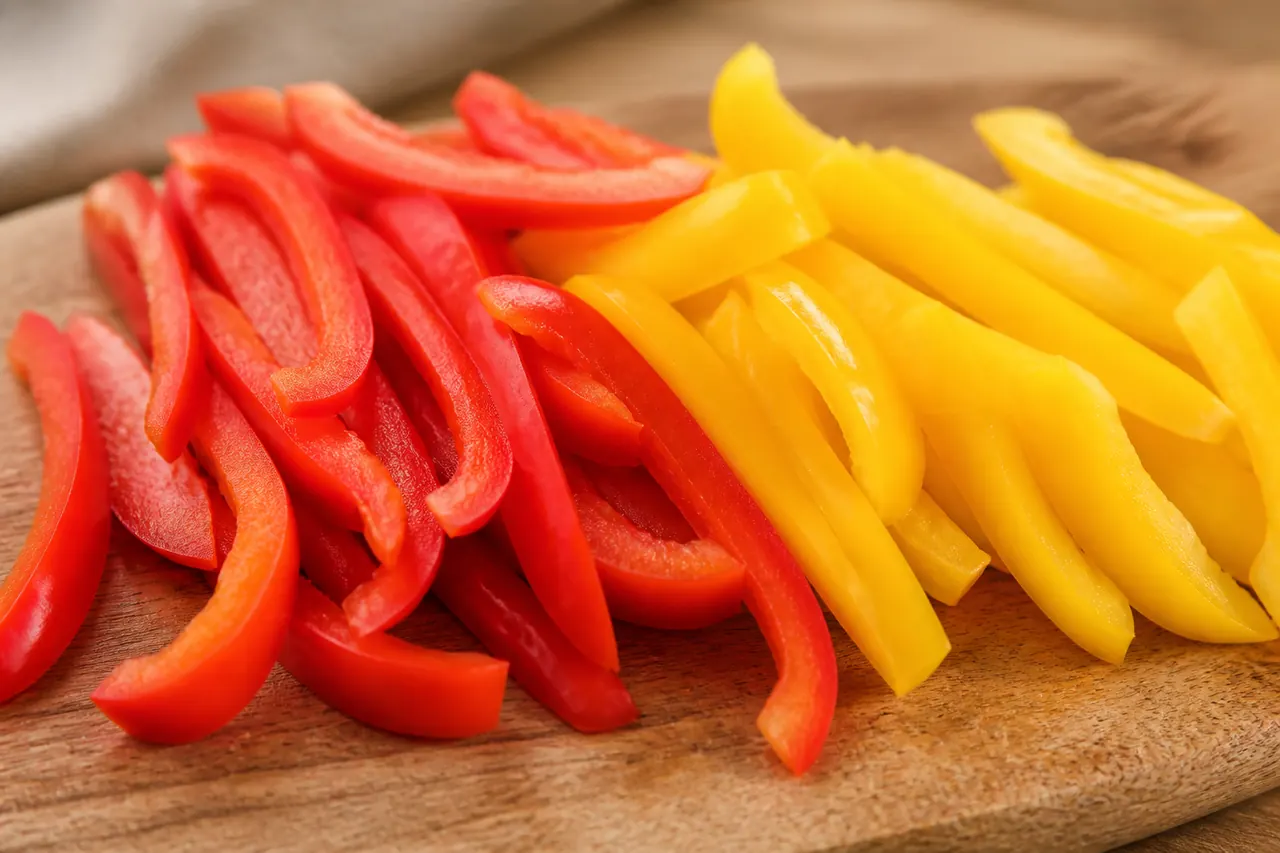
Bell peppers are safe for guinea pigs and are one of the best daily vegetables you can offer. All colours are fine; green and yellow are lower in sugar for everyday feeding, while red is highest in vitamin C. Serve a few thin slices per pig per day with the stalk removed — and never feed chilli or hot peppers.
- Guinea pigs cannot make their own vitamin C, so peppers genuinely earn their place.
- A sensible portion is a few thin slices — roughly an eighth of a pepper — per pig per day.
- Seeds and white pith are not dangerous, though many owners remove them anyway.
- Introduce peppers gradually if your pigs have not had them before.
Yes — guinea pigs can eat bell peppers, and they are one of the best daily vegetables you can offer. All colours are safe. Green and yellow peppers are lower in sugar, making them the better everyday choice, while red peppers carry the most vitamin C. A few thin slices per pig per day is plenty. Never feed chilli or hot peppers.
That is the short version. The slightly longer version explains why peppers matter more than most vegetables, and how to serve them without overthinking it.
Why peppers are more than just a safe vegetable
Guinea pigs cannot synthesise their own vitamin C. Every milligram has to arrive through food, and a deficiency causes real, unpleasant illness.
Bell peppers — capsicum, if you are feeling formal — are one of the most efficient vitamin C foods available, without the sugar load that fruit carries. That is why they appear near the top of every sensible list of best vegetables for guinea pigs, and why they can appear in the bowl daily rather than as an occasional treat.
Does the colour of the pepper matter?
A little, though not enough to lose sleep over. Every colour of sweet bell pepper is safe. The differences are in sugar and vitamin C content.
Green and yellow
Lower in sugar, so the better choice for the everyday portion. All colours are safe.
Red
The highest in vitamin C — excellent, but a touch sweeter, so slightly better as the rotation piece than the daily default.
Chilli and hot peppers
Never. Anything spicy is off the menu entirely — this post is about sweet bell peppers only.
A practical routine: green or yellow as the everyday slice, with red rotated in regularly for the vitamin C boost. Your guinea pigs will not file a complaint either way.
How much pepper per guinea pig?
A few thin slices — roughly an eighth of a pepper — per pig per day is a sensible portion. Peppers are a supporting act in a diet that is still about 80% hay, so there is no need to serve half a pepper per head just because they would happily eat it.
If peppers are new to your pigs, introduce them gradually. Start with a single small slice and watch how it goes down over a few days before making it a daily fixture. New foods in small steps is the rule for everything, and peppers are no exception — the daily feeding plan shows where the vegetable portion fits.
How to prepare a pepper for guinea pigs
Wash the pepper and remove the stalk — that part is not for eating. Slice thinly so you can portion sensibly and see what has actually been eaten.
The seeds and the white pith inside are not dangerous. Many owners remove them anyway, partly out of tidiness and partly because the flesh is the part the pigs are there for. Either approach is fine.
What if my guinea pig will not eat peppers?
Some pigs are suspicious of anything new, and a few maintain lifelong grudges against specific vegetables for reasons known only to themselves. Keep offering a small piece occasionally — persistence often wins.
If a pig genuinely refuses peppers long term, cover the vitamin C requirement with other rich sources instead, and see the vitamin C guide for the options. A pig that suddenly stops eating vegetables it usually enjoys is a different matter — that is a possible illness sign, and worth a call to the vet.
Frequently asked questions
- Can guinea pigs eat peppers every day?
- Yes. Bell peppers are one of the few vegetables that genuinely suit daily feeding, thanks to their vitamin C content and low sugar — especially green and yellow ones. Keep the portion to a few thin slices per pig.
- Can guinea pigs eat pepper seeds?
- Bell pepper seeds are not dangerous, unlike the pips and stones of many fruits. Plenty of owners remove them along with the white pith anyway, but a stray seed is nothing to worry about.
- Which colour pepper is best for guinea pigs?
- Green and yellow peppers are lower in sugar, which makes them the better everyday option. Red peppers have the most vitamin C, so they are excellent in rotation. All colours of sweet bell pepper are safe.
- Can guinea pigs eat chilli peppers?
- No, never. Hot peppers of any variety are unsuitable for guinea pigs. Only sweet bell peppers belong in the enclosure.
- Can baby guinea pigs eat peppers?
- Yes, in small amounts once they are established on solid food, introduced gradually like any new vegetable. If in doubt about a very young or unwell pig, ask a vet.