
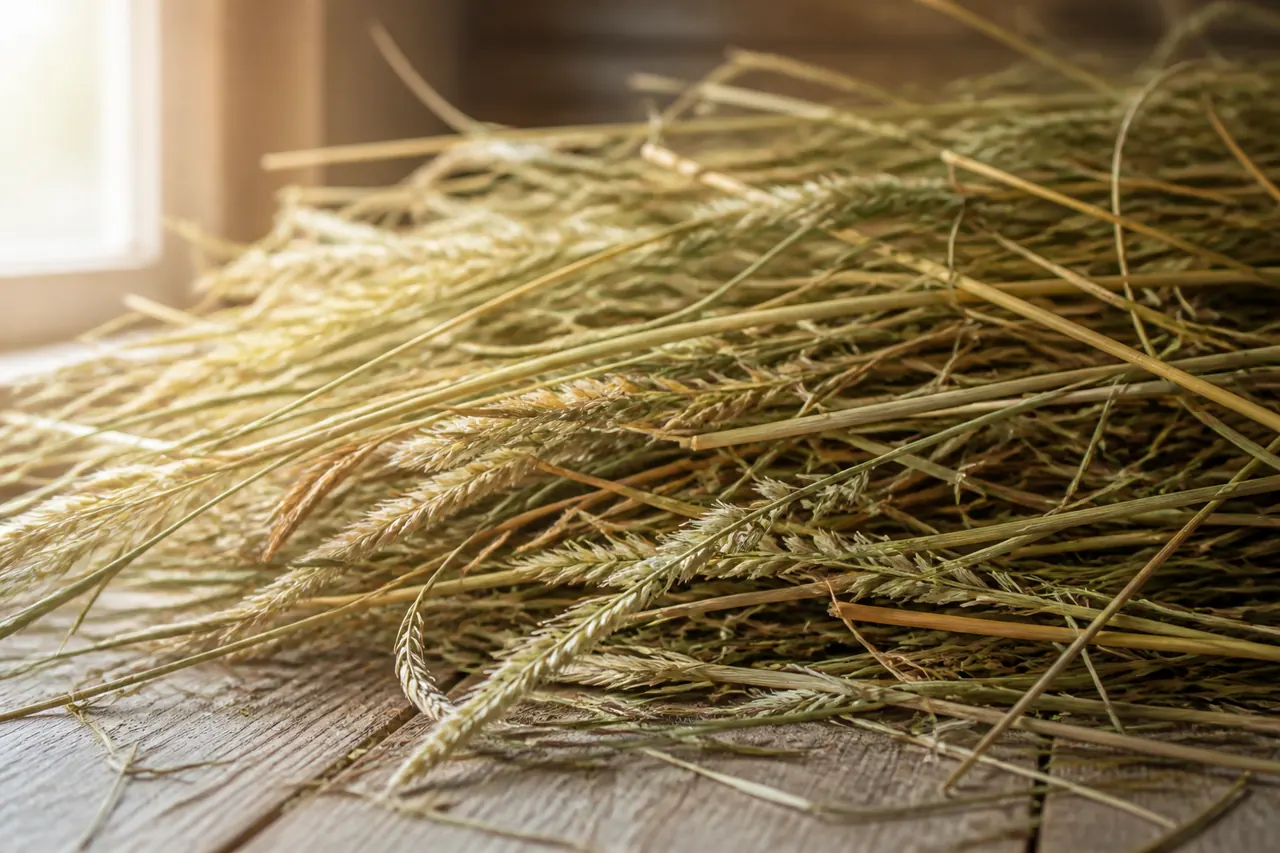
Alfalfa vs Timothy Hay for Guinea Pigs: Which Hay to Feed and When
Quick answer
Key facts
Timothy hay is the everyday choice for healthy adult guinea pigs — a grass hay they can eat in unlimited amounts. Alfalfa is a legume hay, higher in calcium and protein, which suits pups under about six months and pregnant or nursing sows, but should only be an occasional treat for healthy adults.
- Hay should make up roughly 80% of the diet and be available at all times.
- Excess calcium from alfalfa is linked to bladder stones in adult guinea pigs.
- Meadow and orchard grass hays are perfectly good timothy alternatives.
- Judge any hay by smell (sweet and fresh), colour (green) and low dust.
For a healthy adult guinea pig, timothy hay wins this comparison easily. It is a grass hay they can eat in unlimited amounts, all day, every day. Alfalfa is a legume hay with much more calcium and protein — right for pups under about six months and for pregnant or nursing sows, but only a treat for everyone else.
The confusion is understandable, because both are sold in near-identical bags, often on the same shelf. This guide explains the actual difference, who each hay suits, and where meadow and orchard grass fit into the picture.
What is the difference between alfalfa and timothy hay?
Timothy is a grass. Alfalfa is a legume — the same plant family as peas and clover. That one botanical detail drives everything else: legume hays carry noticeably more calcium and protein than grass hays.
For a growing pup or a sow feeding a litter, that extra calcium and protein is useful. For a healthy adult doing nothing more strenuous than rearranging the hay pile, it is a surplus their body has to deal with — and excess calcium is linked to bladder stones, which are as unpleasant as they sound.
Hay is not a side dish, either. It should be roughly 80% of what your guinea pigs eat and should never run out, so the hay you pick as the staple matters more than any other feeding decision. Our guide to types of hay for guinea pigs covers the wider field in more detail.
Quick comparison: which hay suits which pig?
| Hay | Type | Calcium | Who it suits |
|---|---|---|---|
| Timothy | Grass hay | Low | Healthy adults — the everyday staple, unlimited |
| Meadow | Grass hay | Low | Healthy adults — a fine timothy alternative |
| Orchard grass | Grass hay | Low | Adults; softer and good for hay-dust sensitivity |
| Alfalfa | Legume hay | High | Pups under ~6 months, pregnant or nursing sows |
When is alfalfa hay the right choice?
Pups under about six months are growing bone and body at a rate that justifies the extra calcium and protein alfalfa provides. Pregnant and nursing sows are in the same position — they are effectively building guinea pigs, which is demanding work.
For those animals, alfalfa alongside a grass hay is sensible. It does not need to be the only hay in the enclosure; offering timothy or meadow hay as well gets young pigs used to the hay they will eat for the rest of their lives.
Once a pup passes roughly six months, transition them onto grass hay as the staple. There is no ceremony involved — gradually shift the balance over a week or two so their digestion is not surprised. If you are unsure about timing for a particular pig, ask a vet; they will not mind the question.
Timothy vs meadow vs orchard grass
You do not need to be loyal to timothy specifically. Meadow hay and orchard grass are both grass hays, both low in calcium, and both perfectly good staples for healthy adults — without the assumption that you want to buy seventeen more things.
Meadow hay is typically a mix of grasses and tends to be cheaper and softer than a stemmy timothy. Orchard grass is softer again, which makes it the usual recommendation when a guinea pig — or the human handling the hay every day — is sensitive to hay dust.
Many owners simply mix them. Variety in texture keeps the hay pile interesting, and a pig that eats plenty of grass hay is a pig whose teeth and gut are being looked after. The pellets and vegetables are the supporting cast — see our guides to guinea pig pellets and what guinea pigs should eat every day for how the rest of the plate fits together.
How to judge hay quality, whatever the type
The label matters less than the bag's contents. Good hay smells sweet and fresh — a bit like a summer field, not like a damp shed. It should look green rather than yellow or brown, and it should not release a cloud of dust when you pull a handful out.
Dusty, musty or browned hay is worth returning or composting rather than feeding. Your guinea pigs eat this stuff in enormous quantities; quality is not the place to economise. For the broader routine around hay, veg and pellets, the feeding guide covers the whole system.
Frequently asked questions
- Can adult guinea pigs eat alfalfa hay at all?
- Yes, as an occasional treat — a small handful now and then is fine for most healthy adults. It should not be their staple hay, because its higher calcium content is linked to bladder stones over time. Grass hay such as timothy, meadow or orchard should be the unlimited everyday option.
- What is the best hay for young guinea pigs?
- Pups under about six months benefit from alfalfa alongside a grass hay, because the extra calcium and protein supports growth. Offering timothy or meadow hay at the same time gets them used to the hay they will eat as adults, making the switch at around six months straightforward.
- Is timothy hay better than meadow hay?
- Neither is better — both are grass hays and both work as the everyday staple for healthy adults. Timothy tends to be coarser and stemmier; meadow hay is usually a softer mix of grasses. Pick whichever your pigs eat enthusiastically, or mix the two.
- What about timothy vs orchard grass?
- Orchard grass is another low-calcium grass hay and a perfectly good staple. It is softer than timothy and generally less dusty, which makes it a common choice where a guinea pig or an owner reacts to hay dust. Nutritionally, for a healthy adult, the two are interchangeable.
- How much hay should guinea pigs eat every day?
- Hay should be about 80% of the diet and available at all times — there is no such thing as too much grass hay for a healthy guinea pig. If a pig eats noticeably less hay than usual, treat it as a warning sign and speak to a vet.